WebSocket vs REST APIs on Crypto Exchanges: What's the Difference
If you are wiring a strategy up to an exchange, one of the first technical forks you hit is WebSocket vs REST APIs on a crypto exchange. Both let your code talk...
Read more
Learn how to reduce slippage in automated crypto trading using the right order types, lower latency, depth-aware sizing, and smarter timing.

Slippage is the gap between the price your strategy expected and the price your order actually filled at. In manual trading it is an occasional annoyance. In automated crypto trading it is a systematic cost: every alert that fires and every bot that submits an order pays a little more, or receives a little less, than the chart implied. Learning how to reduce slippage in automated crypto trading is one of the highest-leverage things you can do to make a working strategy behave the way your backtest promised.
This guide explains where slippage comes from, how to measure it, and the concrete levers — order type, latency, sizing, and timing — that bring it down. None of this is about predicting the market. It is about execution quality: getting the fill you were entitled to.
When you submit a market order, the exchange matches it against resting orders in the order book, starting at the best available price and walking up or down until your order is filled. If there is not enough size at the top of the book, part of your order fills at worse prices. The volume-weighted average of those fills, compared to the price at the moment you submitted, is your slippage.
Slippage has two main components. Spread cost is the distance between the best bid and best ask — you cross it every time you take liquidity. Impact cost is the extra movement your own order causes by consuming depth. Thin books and large orders make both worse.
Automation removes the human pause, which is usually a good thing — but it also removes the human who would have noticed a fast-moving or illiquid market and waited. A few structural reasons automated flow bleeds more to slippage:
You cannot improve what you do not track. For every automated fill, log four things: the reference price at signal time, the submitted time, the fill price, and the filled size. Slippage in basis points is `(fill_price − reference_price) / reference_price * 10000`, sign-adjusted for direction.
Aggregate this by symbol, by hour, and by order size. Patterns emerge fast: you might find that most of your slippage comes from two illiquid pairs, or from orders placed in the first seconds after a candle close. That tells you where to spend effort. Trimming average execution cost by even a fraction of the spread, applied across thousands of automated orders, meaningfully improves how faithfully your live results track your tests.
The single biggest lever is order type. Market orders guarantee a fill but not a price; limit orders guarantee a price but not a fill. Neither is universally correct.
For a deeper comparison, see our guide on market vs limit orders in automated trading. Setting a maximum slippage tolerance on each order — a price band beyond which you would rather not trade — is one of the most effective habits an automated trader can build.
Every millisecond between your signal and the exchange is a window for the price to move. Latency does not cause slippage directly, but in a fast market it converts into it. The main contributors are the delay in your signal source firing, the network hops needed to reach the exchange, and any queuing inside your own order pipeline.
You reduce it by shortening the path: fire on the event you need rather than waiting for confirmation you do not, host execution close to the exchange's matching-engine region, and keep persistent, pooled connections open so you are not paying a fresh handshake on every order. We cover this in detail in latency in automated crypto trading. The goal is not to win a speed race with high-frequency firms — it is to stop giving away price on ordinary retail-timeframe strategies.
A position size that is fine on a deep market can walk through several price levels on a thin one. Before sizing off your account balance alone, look at available depth. If your order would consume more than a small slice of the resting size near the top of the book, expect impact cost.
Two practical techniques help. Depth-aware sizing caps each order at a percentage of visible liquidity, so a single fill never eats too far into the book. Order slicing breaks a large order into smaller child orders spread over a short window, so each one takes only what the top of the book can absorb cheaply. Understanding how crypto exchange order books work makes both techniques far easier to tune.
Liquidity is not constant. Books are deepest during overlapping active sessions and thinnest during regional off-hours and around major scheduled events. If a strategy allows it, avoiding the most illiquid windows removes a chunk of avoidable slippage. Trading the most liquid pairs — and the most liquid venue for a given pair — also narrows spreads and deepens the book you are drawing from. Where your strategy is indifferent between two symbols, the more liquid one will almost always execute more cleanly.
Most of the levers above are execution-infrastructure problems, not strategy problems. You control the logic; something still has to translate each signal into a fast, correctly sized, correctly typed order. That is the job of a non-custodial relay: it receives your webhook, validates it, and submits the order to your exchange using trade-only API keys with no withdrawal access, so your funds never leave the exchange you already trust. SignalToExchange is built for exactly this layer — reliable, low-latency order submission with per-order controls, so the execution side stops undermining the strategy side. If you want your alerts to reach the exchange quickly and predictably, request access / start your free trial.
No. Any order that takes liquidity crosses the spread, and fast or thin markets add impact cost on top. The realistic goal is to measure slippage, keep it small and predictable, and stop it from quietly eroding an otherwise sound strategy.
A resting limit order fills at your price or better, so it removes negative slippage on entry — but at the cost of sometimes not filling at all. Marketable limit orders are a middle ground: they take liquidity like a market order but cap how far the price can slip.
It matters most for high-frequency strategies, but even a handful of daily automated orders on illiquid pairs can accumulate real execution cost over months. Tracking it tells you whether it is worth acting on.
No. Fees are an explicit charge set by the exchange; slippage is an implicit cost from the market moving against your fill. Both widen the gap between live results and a backtest, so a complete cost model should include each.
Automated trading involves risk. SignalToExchange is execution infrastructure and does not provide financial advice, trading signals, or guarantees of any kind.

If you are wiring a strategy up to an exchange, one of the first technical forks you hit is WebSocket vs REST APIs on a crypto exchange. Both let your code talk...

You send an order to buy one Bitcoin, and the exchange fills 0.4 of it. The rest sits open, or gets cancelled, or fills seconds later at a worse price. If your...
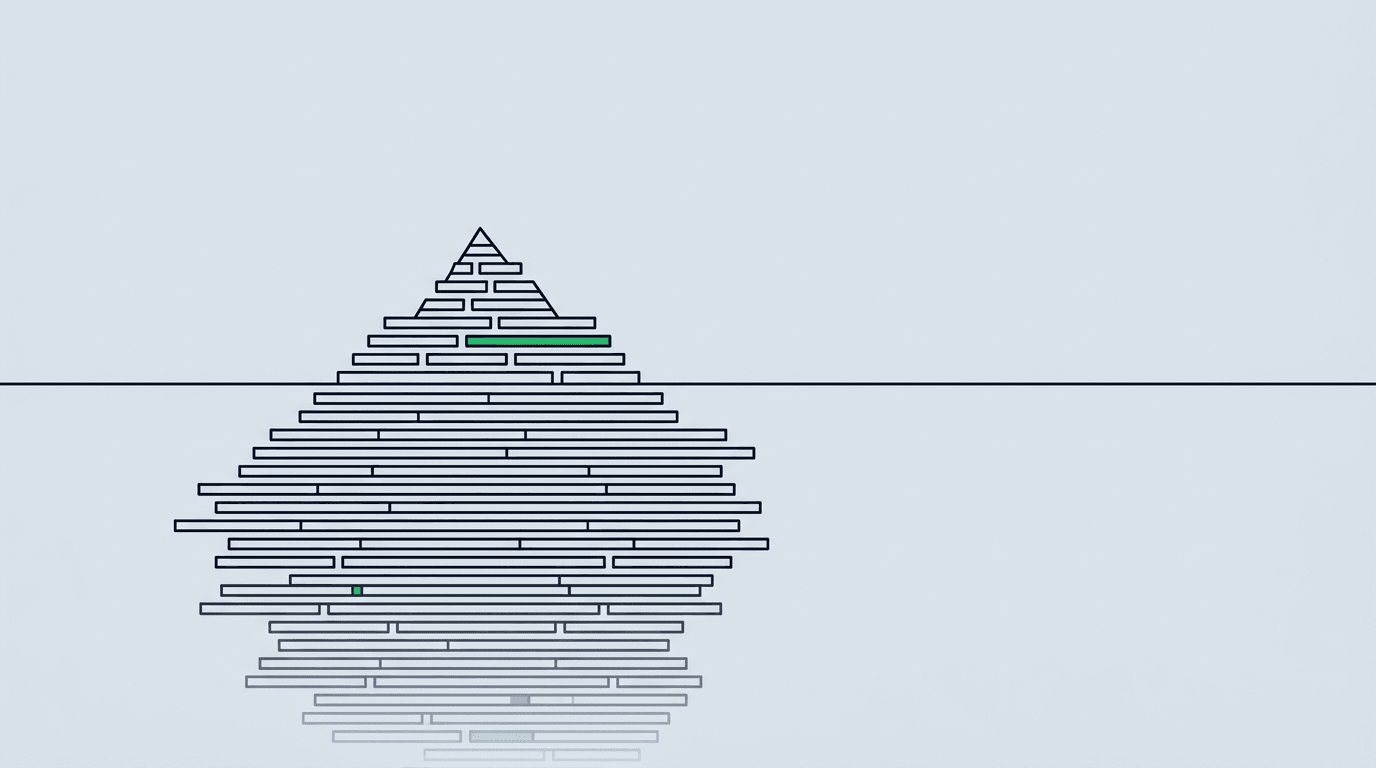
Watch a crypto order book long enough and you will see something odd. A price level shows only a modest amount of size, you send orders into it, and yet the le...
Non-custodial execution. Trade-only API keys. Independent infrastructure built for reliability.
Request Early AccessTrade-only API key enforcement. No withdrawal permissions. No custody.