What Is a Conditional (Trigger) Order and How Automation Uses It
You set up a strategy that should only act when the market reaches a specific level — buy if price breaks above resistance, or exit if it falls through support....
Read more
WebSocket vs REST APIs on a crypto exchange: REST is pull (request-response), WebSocket is push (streaming). Learn where each fits in an automated trading stack.
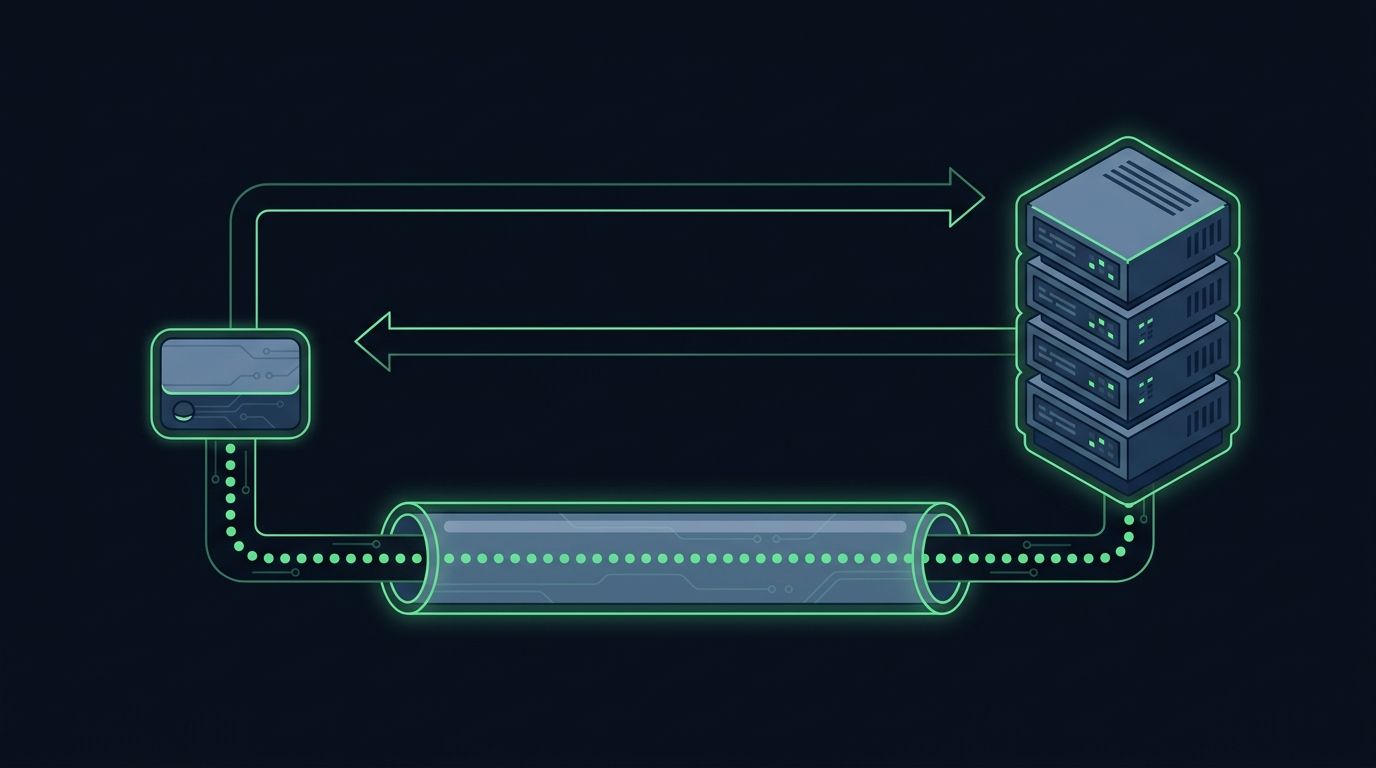
If you are wiring a strategy up to an exchange, one of the first technical forks you hit is WebSocket vs REST APIs on a crypto exchange. Both let your code talk to the exchange. They do it in fundamentally different ways, and picking the wrong one for a given job is a common reason automated setups feel laggy, get rate limited, or miss fills. This guide explains what each protocol actually does, where each one shines, and how the two fit together in a reliable automation stack.
The short version: REST is a request-and-answer conversation, and a WebSocket is an always-open phone line. Neither is "better." They solve different problems, and most serious trading systems use both.
REST (Representational State Transfer) is the workhorse of the web. Your program opens a connection, sends a single request — "place this order," "cancel order 12345," "what is my balance?" — and the exchange sends back one response. Then the connection is done. If you want to ask again, you open another request.
Every REST call is self-contained. It carries its own authentication signature, its own parameters, and its own timestamp or nonce. That makes REST simple to reason about and easy to debug: one request in, one response out, with a clear HTTP status code telling you whether it worked.
The trade-off is that REST is pull-based. The exchange never speaks unless you ask. If you want to know whether the price moved, you have to send a fresh request and check. Do that in a tight loop and you are "polling" — repeatedly asking "anything new? anything new?" — which is exactly where a lot of automated setups run into trouble.
A WebSocket flips the model. Instead of one request per answer, your program opens a single long-lived connection and keeps it open. Once that channel is established, data flows in both directions without a new handshake each time. You subscribe to a stream — say, the order book for BTC/USDT or updates on your own open orders — and the exchange pushes messages to you the instant something changes.
This is push-based. You are not asking repeatedly; the exchange tells you. A new trade prints, a level in the order book changes, your limit order partially fills — each event arrives as a message on the open socket, often within milliseconds of it happening on the exchange's matching engine.
The cost of that speed is complexity. A WebSocket connection is stateful: it can drop, it needs heartbeats to stay alive, and your code has to handle reconnection and re-subscription gracefully. When a socket silently dies and your bot keeps trading on stale data, the results are ugly.
Strip away the jargon and it comes down to who initiates the conversation.
A useful mental picture: REST is sending a text message and waiting for a reply. A WebSocket is a live call where either side can talk at any moment. The related question of push versus repeated polling comes up constantly in signal delivery too, which we cover in webhooks vs API polling for trading signals.
REST is the natural fit for state-changing actions and occasional reads:
Order submission in particular is almost always a REST call, even on systems that lean heavily on WebSockets for data. You want a definitive, acknowledged response for an order: a clear success or a clear error you can retry or escalate. REST's one-request-one-answer shape gives you exactly that clean confirmation.
The catch with REST is rate limits. Because each call is a separate request, hammering the endpoint to simulate real-time data will exhaust your quota fast. If you have ever wondered why a polling bot suddenly starts getting throttled, this is usually why — a topic we go deeper on in crypto exchange API rate limits explained.
WebSockets win anywhere you need continuous, low-latency awareness:
The advantage is not just speed but efficiency. Instead of sending a request every second and mostly getting "nothing changed," you open one connection and receive data only when something actually happens. That is lighter on the exchange, lighter on your rate limit, and dramatically fresher. When execution timing matters, the milliseconds you save by streaming order updates instead of polling for them add up — see latency in automated crypto trading for why that gap matters.
In a well-built automated trading system, the two protocols divide labor cleanly:
This is the same division a relay layer uses. SignalToExchange receives your signal, applies your rules, and submits the resulting order to the exchange over REST so there is a definitive confirmation for every order, while streaming interfaces keep order and fill status current. The important architectural point is separation of concerns: streaming for awareness, request-response for commitment.
It also matters for security. Your keys stay trade-only and non-custodial regardless of protocol — the relay never has withdrawal permission, and your funds never leave your own exchange. WebSockets and REST are just transport; they change how fast data moves, not who controls your money.
For continuous updates, yes — a WebSocket delivers changes as they happen, while REST only answers when you ask. For a single one-off action like placing one order, the difference is negligible, and REST's clear acknowledgment is usually preferable.
You can, and many simple setups do. It works fine for low-frequency strategies. The limitation is that simulating real-time data through REST polling burns your rate limit and adds delay. As soon as timing matters, adding a WebSocket for data pays off.
No — they solve different parts of the chain. A TradingView webhook delivers your signal to your automation. WebSockets and REST are how that automation then talks to the exchange. The signal path and the execution path are separate concerns.
Almost always REST. Submitting an order is a discrete, state-changing action where you want a definitive success-or-error response you can act on, which is exactly what a request-response call provides.
Both use the same authenticated, encrypted transport when implemented correctly. Security depends far more on key permissions than on protocol: trade-only keys with no withdrawal access keep your funds protected either way.
Understanding the difference between WebSocket and REST APIs on a crypto exchange is really about matching the tool to the job — stream for awareness, request for action. If you would rather not build and babysit that plumbing yourself, SignalToExchange handles reliable, low-latency order submission from your signals while your funds stay on your own exchange under trade-only keys. Request access or start your free trial to see it in action.
Automated trading involves risk. SignalToExchange is execution infrastructure and does not provide financial advice, trading signals, or guarantees of any kind.

You set up a strategy that should only act when the market reaches a specific level — buy if price breaks above resistance, or exit if it falls through support....
If you automate futures trading, you have probably noticed something confusing: your chart shows one price, but your position's liquidation level and profit-and...
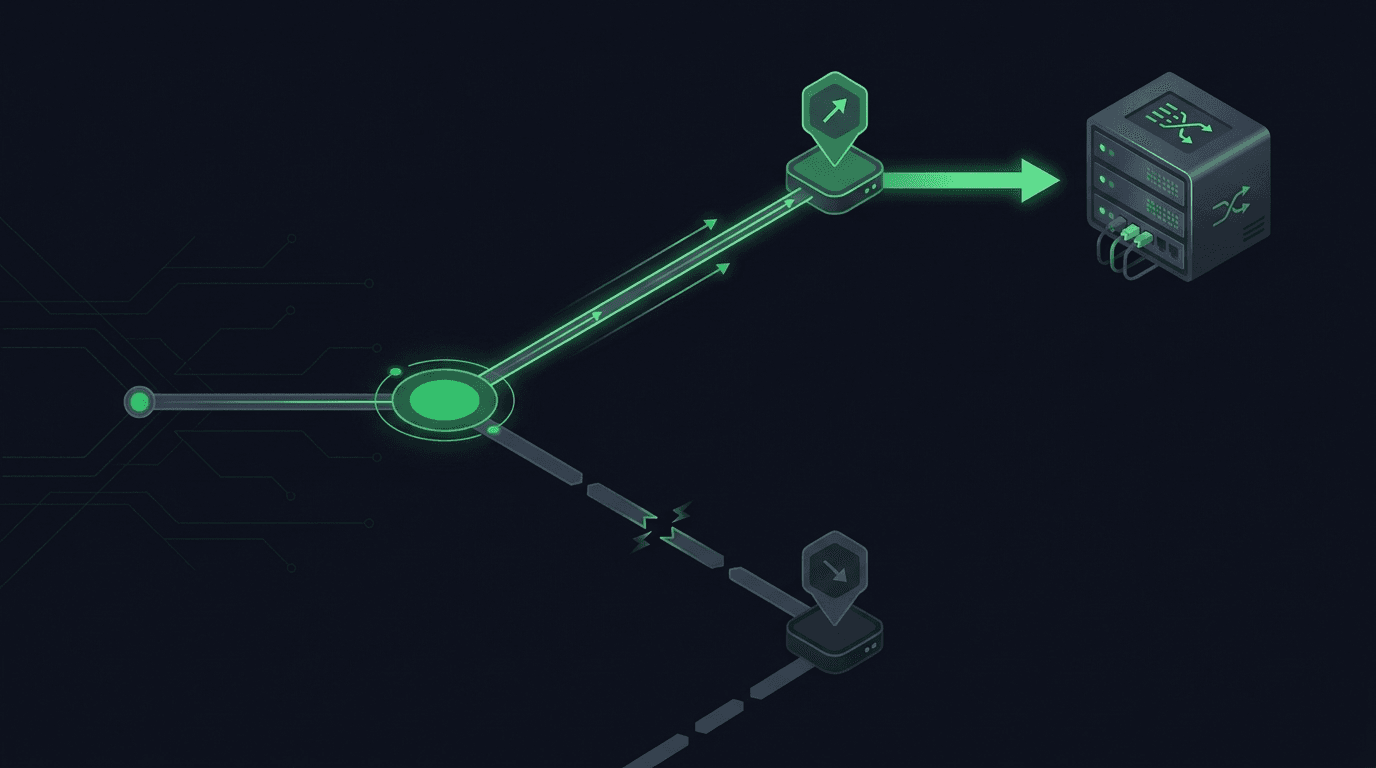
You set a take-profit and a stop-loss on the same position, walk away, and expect the exchange to close the trade at whichever level hits first. On most exchan...
Non-custodial execution. Trade-only API keys. Independent infrastructure built for reliability.
Request Early AccessTrade-only API key enforcement. No withdrawal permissions. No custody.