What Is a Conditional (Trigger) Order and How Automation Uses It
You set up a strategy that should only act when the market reaches a specific level — buy if price breaks above resistance, or exit if it falls through support....
Read more
Automated trades pile up fast and are easy to lose track of. Here is a practical record-keeping workflow for bot-executed crypto trades — what to log, where the data lives, and how to reconcile it. Not tax advice.
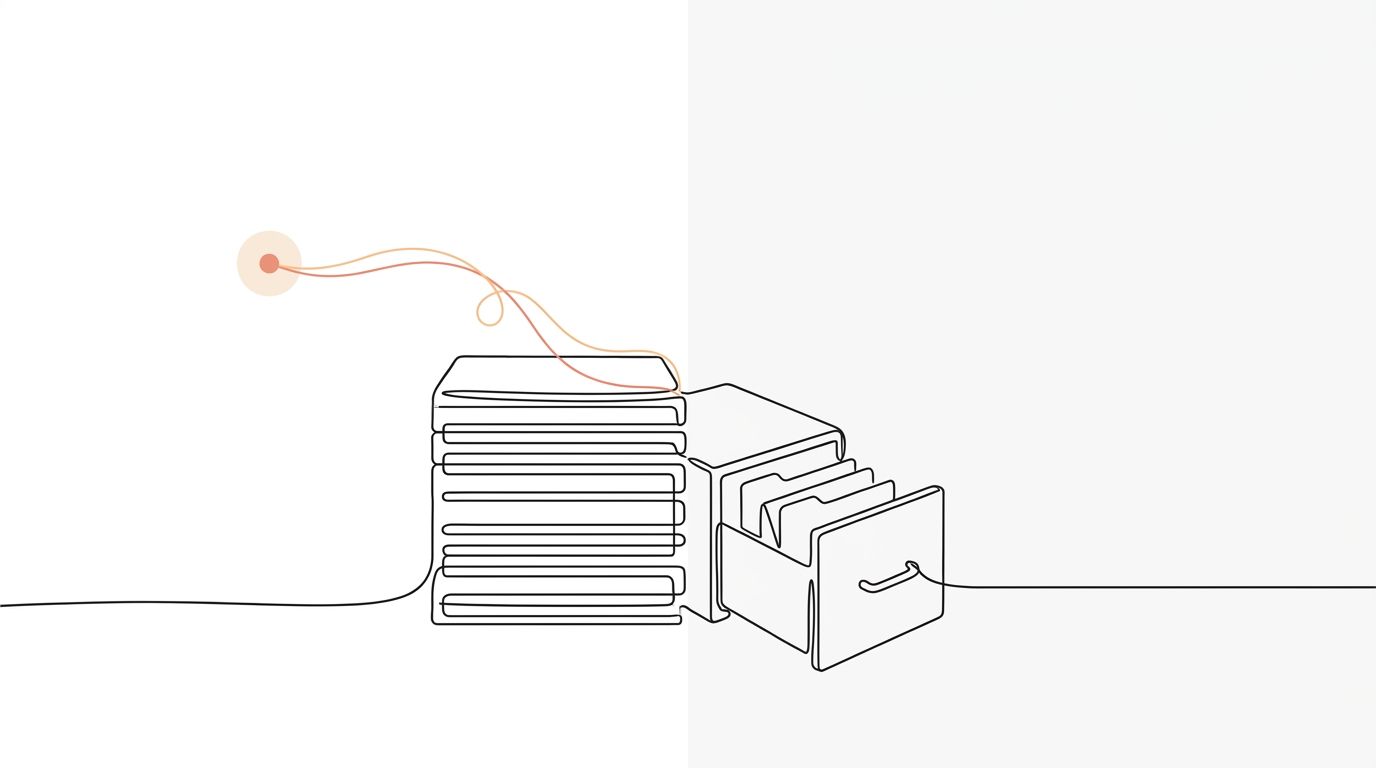
When you automate your trading, orders stop being things you remember and start being things that simply happen. A webhook fires, an order lands on the exchange, and you move on. Multiply that across weeks of alerts and several markets, and you end up with hundreds of fills you never consciously placed. That is exactly when good crypto trading bot tax record-keeping stops being optional. Solid records help you reconcile your account, debug your automation, and hand clean data to whoever prepares your taxes. To be clear up front: this is a guide to record-keeping process, not tax advice. Rules differ by country and change over time, so treat the specifics of your filing as a conversation for a qualified tax professional.
Manual traders usually remember their trades because each one took a deliberate click. Automated traders do not have that memory. A single strategy can generate many entries and exits per day, across multiple symbols, at hours you were asleep. The volume alone makes reconstruction after the fact painful.
There are structural reasons too. Automation can produce partial fills, retries, and the occasional duplicate if your system is not careful. Exchanges also age out order history, and some only let you export a limited window at a time. If you wait until the end of the year to gather everything, you may find the earliest months are already hard to retrieve. The fix is not heroic memory. It is a habit of capturing each trade as it happens, in a form you control.
The goal is a complete, timestamped log of every executed order, in a format you can read years later without the exchange's help. For each fill, aim to capture the essentials:
That last field is easy to skip and valuable to keep. Tying each fill to the alert that caused it turns a flat list of trades into an audit trail you can actually reason about. It also makes it obvious when something fired that should not have.
Bot-executed trades leave traces in more than one place, and each source has gaps. Knowing where to look keeps your records complete.
The exchange itself is the source of truth for what actually filled. Most exchanges offer a trade history export (CSV) and an API endpoint for order and trade history. The export is convenient; the API is better for automation because you can pull on a schedule. Either way, the exchange record is authoritative for price, quantity, and fees.
Your automation layer holds the intent. TradingView shows the alerts you configured, and your relay or scripts hold the payloads that were sent. On its own, intent does not prove a trade happened, but paired with the exchange record it explains why each trade happened.
Because SignalToExchange sits between your signal and the exchange as a non-custodial relay, its execution logs connect the two: each accepted signal, the order it produced, and the exchange's acknowledgement. Those logs are useful for reconciliation, but the exchange remains the authoritative record of settlement. If your automation ever retries an order, you also want confidence you are not double-counting; that is where idempotency keys that prevent duplicate trades matter for clean records.
You do not need expensive software to keep good records. You need a repeatable routine and a single place where the data accumulates. A workable workflow looks like this:
Automating the capture step is worth the effort. Trades you have to remember to log are trades you will eventually forget. A small scheduled script that appends new fills to a running file removes the human failure point entirely, which is the same reliability logic behind monitoring and alerting for automated trading systems.
Records are only trustworthy if they match reality. Reconciliation is the periodic check that your log agrees with the exchange.
The mechanics are simple. Compare the set of trades in your file against the exchange's trade history for the same period. Look for fills the exchange shows that your log is missing, entries in your log that the exchange never confirmed, and quantities or fees that disagree. Each discrepancy has a cause worth understanding: a missing fill may mean your capture job skipped a run, while a logged order the exchange never filled often traces back to a rejection. Understanding how your system handles failed and rejected orders makes those mismatches easy to explain rather than alarming.
Reconcile on a rhythm you can sustain — monthly is common — so gaps surface while the underlying data is still easy to retrieve. Catching a missing week in February is trivial. Discovering it the following January, after the exchange has aged out the detail, is not.
A few patterns cause most of the pain. Relying on the exchange to keep your history forever is the big one; export windows and retention limits mean the data you assume is safe may quietly disappear. Ignoring fees is another, since incomplete cost data distorts every downstream calculation. Mixing timezones silently corrupts the order of events. And treating a single strategy's internal log as complete overlooks manual trades or other bots running on the same account.
The subtler mistake is inconsistency: keeping great records for three months, then letting the habit lapse during a busy stretch. Records are most valuable when they are continuous, because a gap in the middle is often the hardest thing to reconstruct.
Treat the exchange as a source, not your archive. Exchanges limit how far back you can export and can restrict access if there is ever an account problem. Keeping your own copy means your history does not depend on continued access to any single platform.
Your automation logs — alerts, payloads, and relay logs — capture intent: what your system decided to do. Exchange records capture settlement: what actually filled, at what price, with what fees. You want both. Intent explains the why; the exchange record is authoritative for the what.
A practical default is to capture trade history weekly and reconcile against the exchange monthly. Frequent, small checks keep discrepancies cheap to fix, because the source data is still readily available while it is recent.
No. This article covers record-keeping process only. How your trades are treated depends on your jurisdiction and circumstances, and those rules change. Use these records as clean input for a qualified tax professional, who can tell you what actually applies to you.
Good record-keeping for bot-executed trades is a habit, not a product: capture every fill as it happens, normalize it into one format you control, store it in UTC, and reconcile against the exchange on a schedule. Do that and your history stays complete and trustworthy — ready for debugging, for reconciliation, and for whoever prepares your taxes. If you want an execution layer whose logs make that reconciliation straightforward, with trade-only keys and non-custodial execution so your funds never leave your exchange, request access or start your free trial. See how SignalToExchange routes signals securely, and keeps a clear record of every order it places on your behalf.
Automated trading involves risk. SignalToExchange is execution infrastructure and does not provide financial advice, trading signals, or guarantees of any kind.

You set up a strategy that should only act when the market reaches a specific level — buy if price breaks above resistance, or exit if it falls through support....
If you automate futures trading, you have probably noticed something confusing: your chart shows one price, but your position's liquidation level and profit-and...
You set a take-profit and a stop-loss on the same position, walk away, and expect the exchange to close the trade at whichever level hits first. On most exchan...
Non-custodial execution. Trade-only API keys. Independent infrastructure built for reliability.
Request Early AccessTrade-only API key enforcement. No withdrawal permissions. No custody.