Why You Should Never Put API Keys in TradingView Alert Messages
It is a tempting shortcut. You are wiring up a TradingView strategy to fire orders automatically, the receiving system asks for your exchange credentials, and...
Read more
IP allowlist vs VPN for exchange API access: what each control actually does, where each helps, and which is safer for automated crypto trading.
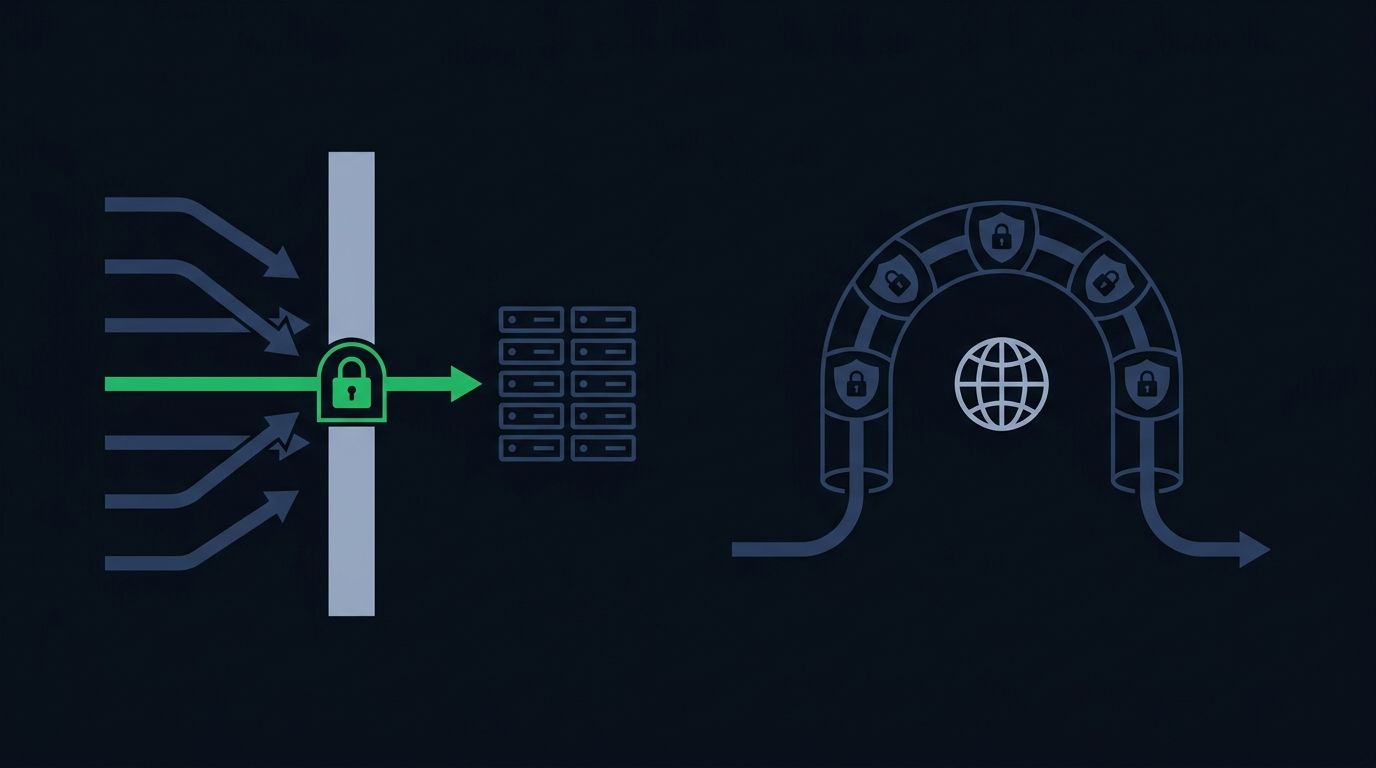
If you automate crypto trades, your exchange API key is the most sensitive credential you own. Two controls come up constantly when traders try to lock that key down: IP allowlisting and VPNs. Getting the IP allowlist vs VPN for exchange API decision right is the difference between a key that only works from one trusted place and a key that merely hides where your traffic comes from. The two sound similar. They are not. This guide breaks down what each control actually does, where each one helps, and which is safer when a bot or relay is placing orders on your behalf around the clock.
The short version: allowlisting and a VPN solve different problems. Allowlisting is an access control enforced by the exchange; a VPN is a network tunnel that changes your apparent location. Used well they complement each other. Treated as interchangeable, you can end up thinking you are protected when you are not.
IP allowlisting (sometimes called IP whitelisting) is a setting on the exchange side. When you attach a list of allowed IP addresses to an API key, the exchange rejects any request that arrives from an address not on the list. It does not matter if the request carries a valid signature or a correct key and secret. Wrong source IP, rejected order.
This matters because it changes what a leaked key is worth. If your key and secret are stolen through a compromised laptop, a leaky log file, or a phishing page, an attacker still cannot use them unless they are also sending requests from one of your allowlisted addresses. The credential becomes location-bound. For a deeper walkthrough of the setup itself, see our guide on IP whitelisting for exchange API keys.
Allowlisting pairs naturally with two other controls. First, trade-only API keys with no withdrawal permission, so even a working key cannot move funds off the exchange. Second, a clear understanding of what each API key permission actually grants. Allowlisting narrows where a key works; permissions narrow what it can do. You want both.
A VPN, or virtual private network, routes your traffic through an intermediary server before it reaches the internet. Two things change as a result. Your connection to that server is encrypted, and the outside world sees the VPN server's IP address instead of your own.
VPNs are genuinely useful for privacy and for protecting traffic on untrusted networks like coffee-shop Wi-Fi. But notice what a VPN does not do. It does not stop a stolen key from working. If an attacker has your key and secret, a VPN on your machine is irrelevant to them; they will connect from wherever they like. A VPN also does not, by itself, give the exchange any way to tell your requests apart from anyone else's who happens to use the same VPN endpoint.
There is also a subtle trap. Consumer VPNs rotate exit IPs and share a single exit address across thousands of users, which is the opposite of what an allowlist wants. Allowlist a shared VPN exit and you have effectively allowlisted every stranger routing through that server. And if the VPN reassigns your exit IP mid-session, your own legitimate orders start getting rejected.
Here is the distinction that resolves most confusion. Allowlisting is enforced by the exchange and controls who is allowed in. A VPN operates on your side and controls what your traffic looks like on the way out. One is a lock on the door. The other is a change of return address.
For protecting an automated trading key, the lock matters more than the return address. A stolen credential is the realistic threat, and only allowlisting neutralizes it at the exchange boundary. A VPN improves privacy on hostile networks, but does nothing to stop a leaked key from placing orders. So when the question is framed as which is safer for exchange API access, allowlisting is the stronger control by a wide margin. Safer does not mean the only tool, though: the two live at different layers, and a careful trader can use both.
A VPN earns its place in a few specific situations. If you manage your exchange account or configure automation from public or shared networks, a VPN protects the surrounding traffic, including logins and dashboard sessions, from local eavesdropping. If you run your own automation on a cloud server with a single, stable, dedicated IP, that static address is exactly what you want to allowlist, and you get the privacy layer and the allowlist target from the same place.
The failure mode to avoid is using a rotating consumer VPN as if it were an allowlist. It is not one, and treating it like one leaves you with neither reliable access nor real protection.
When you automate through a hosted relay, the relay is what talks to the exchange, so its outbound IP is the one that must be on your allowlist, not your laptop's. Your TradingView alert or your custom backend sends a signal to the relay; the relay validates it and submits the order to the exchange from its own stable infrastructure IP. So the address you allowlist is the relay's documented static IP range.
SignalToExchange is built around exactly this model. It is a non-custodial relay: your funds never leave your exchange, and your keys are trade-only with no withdrawal access. You allowlist the relay's stable outbound IPs, attach a trade-only key, and every signal that fires becomes one order submitted from a known, fixed source. If a key were ever exposed, the allowlist plus trade-only permission means it could not withdraw funds or even place orders from an unknown machine. Rotating that key on a schedule closes the loop; here is how and when to rotate exchange API keys without breaking your automation.
A short, practical checklist for a key that a bot or relay uses:
For protecting an API key, IP allowlisting is safer. It is enforced by the exchange and blocks requests from any address not on your list, which neutralizes a stolen key. A VPN only changes your apparent location and encrypts traffic; it does nothing to stop a leaked key being used elsewhere.
Only if it gives you a single, static, dedicated IP that you control, such as a VPN or server with a fixed exit address. Rotating consumer VPNs share one exit IP across many users and reassign addresses often, so allowlisting one either trusts strangers or breaks your own access when the IP changes.
Not strictly, but they cover different risks. Allowlisting protects the API key at the exchange. A VPN protects your surrounding traffic on untrusted networks. Many traders run their automation on a cloud server with a static IP, which serves as both the allowlist target and a stable network identity.
You allowlist the relay's stable outbound IP range, because the relay is the service that actually connects to the exchange. Your own device only sends signals to the relay; it never touches the exchange directly, so its IP does not need to be allowlisted.
IP allowlisting and VPNs are not competitors; they are controls at different layers. Allowlisting is the lock that keeps a leaked key from working, and it matters most for automated trading. A VPN is a useful privacy layer, but not a substitute for an exchange-enforced allowlist. Combine a stable allowlisted IP, a trade-only key, and regular rotation, and an exposed credential becomes close to worthless to an attacker.
Want execution that fits this model out of the box? SignalToExchange is a non-custodial relay with a stable, allowlistable outbound IP and trade-only key support, so your funds stay on your exchange and every signal becomes exactly one order. Request access or start your free trial and route your signals from a known, fixed source.
Automated trading involves risk. SignalToExchange is execution infrastructure and does not provide financial advice, trading signals, or guarantees of any kind.
It is a tempting shortcut. You are wiring up a TradingView strategy to fire orders automatically, the receiving system asks for your exchange credentials, and...
You wire up a strategy, connect an API key, and let the automation run. It works. But the orders are landing on the same exchange account that holds your long-t...

When you automate crypto trading, your exchange account stops being something you log into by hand and becomes something software touches around the clock. That...
Non-custodial execution. Trade-only API keys. Independent infrastructure built for reliability.
Request Early AccessTrade-only API key enforcement. No withdrawal permissions. No custody.