What Is a Conditional (Trigger) Order and How Automation Uses It
You set up a strategy that should only act when the market reaches a specific level — buy if price breaks above resistance, or exit if it falls through support....
Read more
How retries, timeouts, and backoff keep automated exchange orders resilient when networks and APIs misbehave — and how to add them without firing the same trade twice.

Your strategy fires a signal. A single network hiccup swallows the request, and the exchange order never lands. No fill, no error you noticed, just a trade that quietly didn't happen. This is the failure mode that a solid retry and timeout design for exchange orders is built to prevent. Automated trading lives or dies on the unglamorous plumbing between a signal and a confirmed order, and retries and timeouts are the core of that plumbing.
This guide explains what timeouts actually protect you from, when a retry is safe and when it is dangerous, and how backoff and idempotency turn a fragile order path into a resilient one. It is written for people building or evaluating automated trading systems, not as trading advice.
An order request travels across the public internet to an exchange, through a load balancer, into a matching engine, and back. Every hop can fail. In practice, failures fall into two buckets, and telling them apart is the whole game.
Transient failures are temporary and usually clear on their own: a dropped TCP connection, a request that hit HTTP 429 (rate limited), a gateway that returned HTTP 503, or a response that simply never arrived before your client gave up. Terminal failures are permanent for that request: insufficient balance, an invalid symbol, a malformed payload, or an authentication error. Retrying a terminal failure just repeats the same rejection; retrying a transient one often succeeds on the next attempt.
The hard case sits between them. When a request times out, you frequently do not know whether the exchange received it. The order might have been placed, rejected, or never seen at all. Designing for that ambiguity is what separates a resilient system from one that occasionally double-trades.
A timeout is a deadline. It caps how long your client waits for a response before it stops waiting and decides what to do next. Without one, a single stalled connection can hang a worker indefinitely, blocking every signal queued behind it. In a trading context, a stuck request is worse than a failed one, because the market keeps moving while you wait.
It helps to set two separate deadlines. A connect timeout bounds how long you wait to establish a connection — keep this short, often under two seconds, because a slow handshake usually means the endpoint is unreachable. A read timeout bounds how long you wait for the exchange to respond after the request is sent. Read timeouts should reflect how long the exchange realistically takes under load, not an optimistic best case.
The goal is not to wait forever for certainty. It is to fail fast, then reconcile. A timeout should hand control back to your logic quickly so it can decide whether to retry, check order status, or move on.
Retrying sounds simple — try again — but a careless retry is how automated systems fire duplicate orders. The rule is straightforward: retry transient failures, never retry terminal ones, and treat ambiguous timeouts with special care.
Retry on connection errors, read timeouts, HTTP 429, and 500-series responses (HTTP 500 through 504). Do not retry on 400-series client errors such as bad requests, authentication failures, or insufficient-balance rejections, because the same request will fail the same way. For a full breakdown of how to classify and route each rejection, see our guide on how to handle failed and rejected orders in a trading bot.
The dangerous case is the timeout, where the order may already exist. Blindly resubmitting can place a second position. The safe pattern is to make each order carry a stable client order ID — a unique identifier you generate before the first attempt and reuse on every retry. Most exchanges honor this ID and will reject a duplicate rather than open a second order, which turns a risky retry into a safe one. This is the same idempotency principle we cover in prevent duplicate trades with idempotency keys, and it is the single most important safeguard in any retrying order path.
Retrying immediately, in a tight loop, is a good way to turn a brief blip into a self-inflicted outage. If an exchange is rate limiting you, hammering it with instant retries only deepens the throttle. The fix is exponential backoff with jitter.
Exponential backoff means each retry waits longer than the last — for example 250 milliseconds, then 500, then one second, then two. The delay grows so that a struggling endpoint gets room to recover. Jitter adds a small random offset to each delay so that many clients retrying at once do not all fire again on the same schedule and create synchronized bursts.
A few guardrails keep backoff healthy:
Because rate limits are the most common reason to back off, it helps to understand how exchanges enforce them; our explainer on crypto exchange API rate limits covers the weight systems and windows that drive most 429 responses.
Exchanges are not uniform. A market order on a busy venue may confirm in well under a second, while the same endpoint during a volatility spike can take several seconds or shed load entirely. Tune your read timeouts to observed behavior per exchange, and revisit them as conditions change.
When a placement times out, prefer verification over blind resubmission. Query the order or your open positions using the same client order ID before deciding to retry. Reconciling actual exchange state is always safer than assuming your request did or did not land. Instrument every attempt — log the attempt number, the latency, and the outcome — so you can see whether a symbol or venue is chronically slow. Resilience you cannot observe is resilience you cannot trust, which is why monitoring and alerting belong alongside any retry logic.
Putting the pieces together, a dependable automated order path looks like this:
This flow accepts an uncomfortable truth: you cannot make the network reliable, so you design around its unreliability. One signal should still result in exactly one order, even when the path to the exchange is noisy.
SignalToExchange is the relay layer that runs this logic for you. It receives your signal by webhook, applies timeouts, classifies failures, retries transient ones with backoff, and uses stable order identifiers so a retry never becomes a duplicate trade. You keep control of the strategy; the relay handles the delivery.
Just as important is what the relay does not touch. It connects with trade-only API keys that have no withdrawal permission, and your funds never leave your own exchange account. The design is non-custodial by default: the relay moves orders, not money. That boundary matters most precisely when things are failing and a system is retrying under pressure.
There is no universal number, but three to five attempts is a common ceiling for transient failures. Beyond that, the problem is usually not temporary, and continuing to retry mainly adds latency and load. Always pair a retry cap with a maximum total delay so an order cannot keep retrying long after the trade stopped being relevant.
Only if you retry without a stable identifier. When each order carries a client order ID that stays the same across attempts, the exchange can recognize a duplicate and reject the second copy instead of opening a new position. This idempotency is what makes retrying a timed-out order safe rather than reckless.
Use two deadlines: a short connect timeout (often under two seconds) and a longer read timeout tuned to how the specific exchange behaves under load. There is no single correct value — measure real response times per venue and set read timeouts with headroom above the typical case, then adjust as market conditions change.
Yes, but back off first. A 429 means you are sending too fast, so retrying immediately makes it worse. Wait according to the exchange's `Retry-After` header when present, or use exponential backoff with jitter, and reduce your request rate so you stop hitting the limit in the first place.
Reliable execution is mostly about handling the moments when things go wrong. If you would rather not build and maintain retry, timeout, and idempotency logic yourself, SignalToExchange provides it as managed relay infrastructure. Request access or start your free trial to route your signals through it.
Automated trading involves risk. SignalToExchange is execution infrastructure and does not provide financial advice, trading signals, or guarantees of any kind.

You set up a strategy that should only act when the market reaches a specific level — buy if price breaks above resistance, or exit if it falls through support....
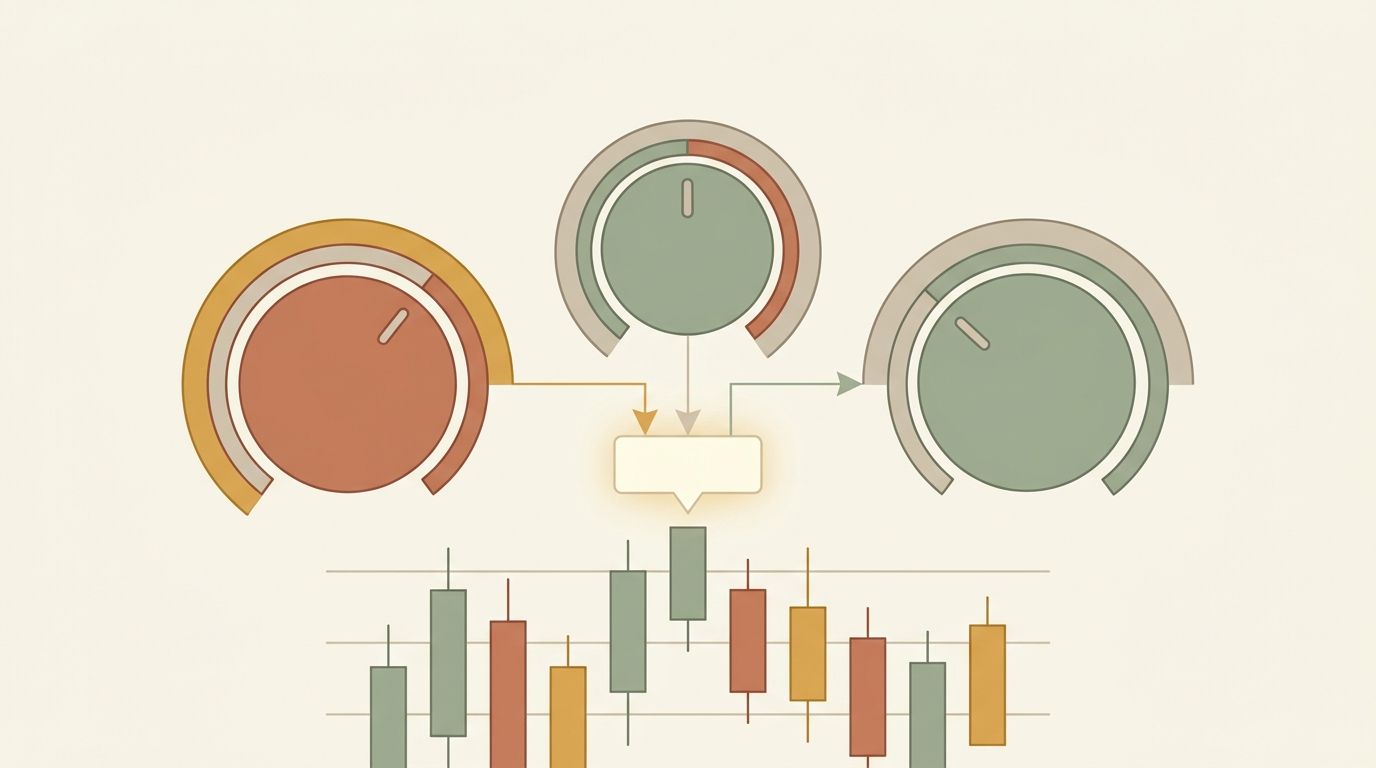
If you automate futures trading, you have probably noticed something confusing: your chart shows one price, but your position's liquidation level and profit-and...
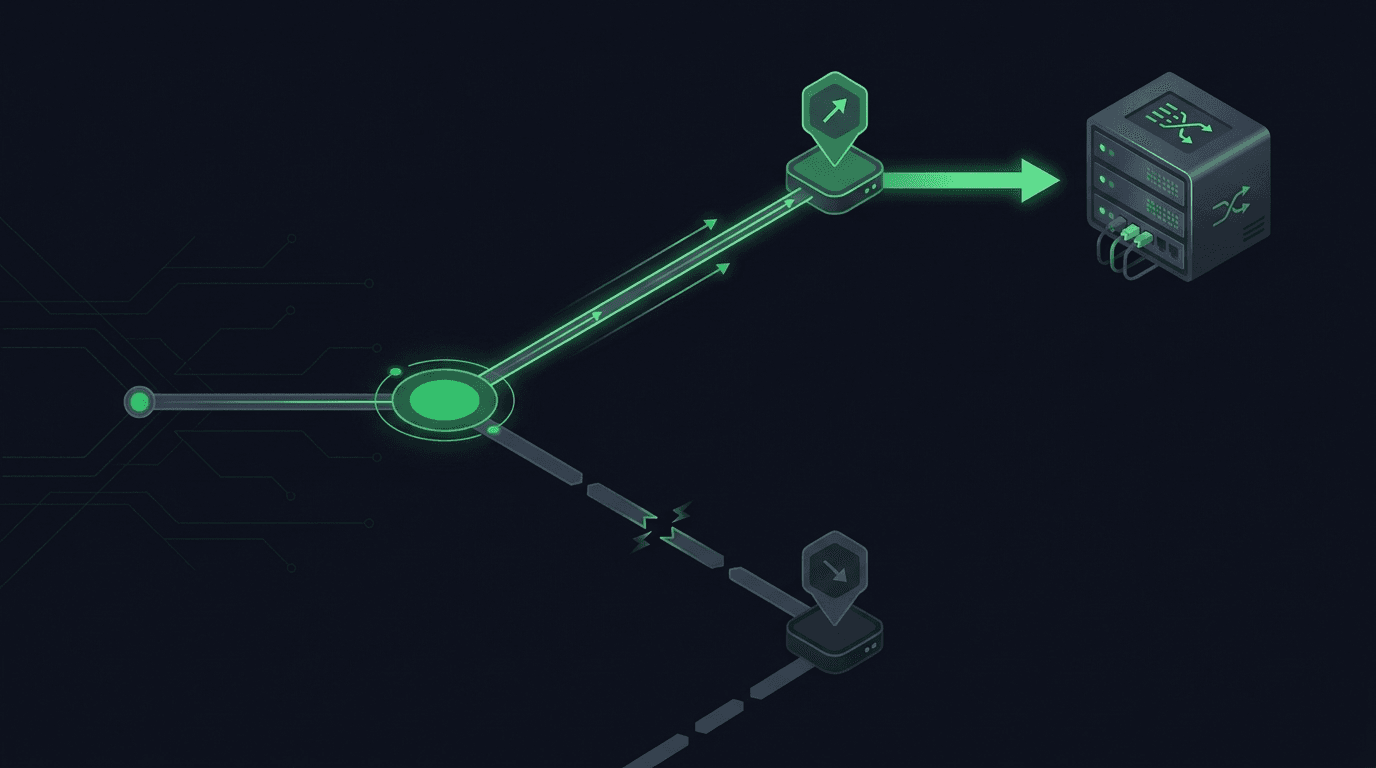
You set a take-profit and a stop-loss on the same position, walk away, and expect the exchange to close the trade at whichever level hits first. On most exchan...
Non-custodial execution. Trade-only API keys. Independent infrastructure built for reliability.
Request Early AccessTrade-only API key enforcement. No withdrawal permissions. No custody.