A Non-Custodial Alternative to 3Commas for TradingView Automation
If you run strategies on TradingView and want your alerts to fire real orders, you have probably looked at 3Commas. It is a capable platform, but many traders...
Read more
An honest look at the best TradingView automation tools in 2026 — how to compare them on custody, API key permissions, exchange coverage, and execution reliability.

If you run a strategy on TradingView, the alert is only half the job. Turning that alert into a real order on your exchange is where tooling matters — and there are more options than ever. This guide is an honest framework for evaluating the best TradingView automation tools in 2026. Rather than ranking products by popularity, it walks through the criteria that actually decide whether a tool is safe and dependable enough to connect to your exchange account. You bring the strategy; the tool's job is execution.
We will not tell you which strategy to trade or claim any outcome. The aim is to help you choose the layer that matches how you trade and how much risk surface you are comfortable with.
Most tools fall into one of three buckets, and knowing which you are looking at clears up a lot of confusion.
These are broad suites — DCA bots, grid bots, copy trading, marketplaces, portfolio dashboards. They can accept TradingView alerts, but automation is one feature among many. Good if you want a large built-in toolkit and are comfortable with a bigger product surface.
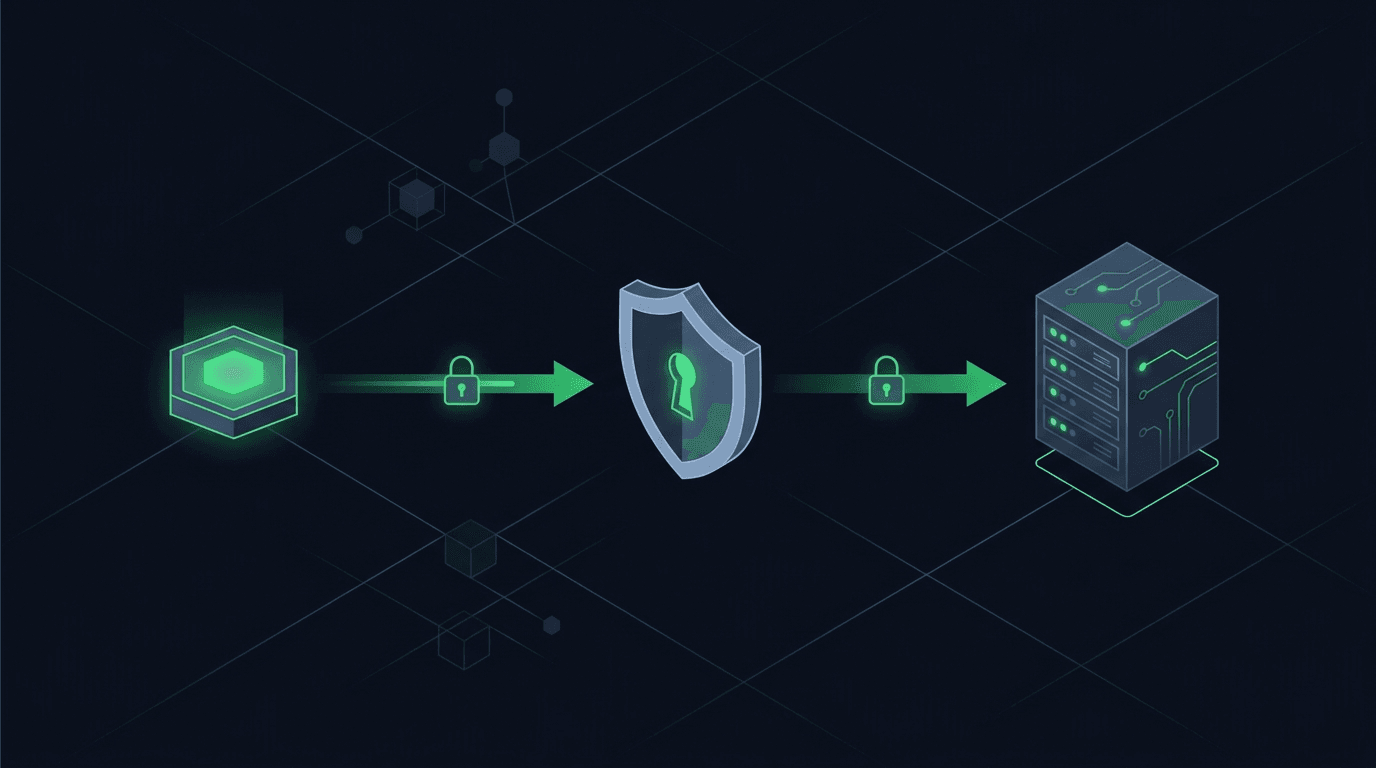
These do one thing: take a structured signal and place the matching order, reliably and without holding your funds. Smaller surface area to learn, secure, and trust. SignalToExchange sits here — it is execution infrastructure, not a signal seller or strategy builder.
Developers sometimes wire TradingView straight to an exchange API with their own server. Maximum control, but you own every edge case — retries, duplicate orders, key storage, and uptime. If you go this route, read our TradingView webhook to exchange guide first to see what a robust pipeline has to handle.
Once you are about to paste in an API key, marketing pages stop mattering and mechanics take over. These are the dimensions worth scoring every tool on.
The first question is whether the tool ever holds your assets. A non-custodial tool never does — your funds stay in your own exchange account, and the tool only sends orders. Your funds never leave your exchange. Check whether a platform ever asks you to deposit onto it, or whether the connection is purely API-based. Custody is a higher-trust decision than connectivity; we break down the difference in custodial vs non-custodial trading bots.
Exchanges let you scope a key to read, trade, and withdraw independently, and the exchange enforces those limits — not the software holding the key. An execution layer has no legitimate need for withdrawal permission. The safest setup is a dedicated trade-only key: it places orders, never withdrawals, with withdrawal explicitly disabled. Then the worst case for a compromised key is unwanted orders, not drained funds. Here is how to set up trade-only API keys, and a fuller look at whether it is safe to give a trading bot your API keys.
Ask how keys are stored at rest. Plain-text storage is a red flag; look for encryption with KMS-backed envelope encryption so a database leak does not expose usable credentials.
This is the dimension hardest to judge from a landing page and the one that bites hardest when it fails. When the same alert arrives twice — TradingView retried, or a network blip duplicated it — does the tool place two orders or recognize the duplicate? SignalToExchange treats this as a first-class concern: every signal carries an idempotency key, so one signal fires exactly one order, even under retries. If you have ever had a webhook double-fire, you know the cost is a real, unintended position. We explain the mechanism in how idempotency keys prevent duplicate trades.
Confirm the tool supports the specific exchange and market — spot or futures — you actually trade. Broad coverage is useless if your venue is missing.
You should be able to cut access instantly by deleting the key on your exchange. That kill switch always stays with you, regardless of which tool you pick.
When you shortlist any TradingView automation tool, run the same questions for each option:
There is no single best tool for everyone — the right answer depends on your priorities. If you want a large no-code toolkit and are comfortable with a bigger platform, an all-in-one suite may fit. If you mainly want a secure, predictable connection between TradingView and your exchange with minimal surface area, a focused execution layer is the closer match. And if you need full control and can maintain it, self-hosting is viable — provided you handle idempotency, key security, and uptime yourself.
SignalToExchange is built for the middle case: non-custodial execution infrastructure around trade-only keys, encrypted key storage, idempotent dispatch, and predictable latency. It does not pick or judge your strategy — that stays with you.
To see how secure, idempotent routing works end to end before you commit, start with our TradingView webhook to exchange setup guide, or Request access / start your free trial →
Automated trading involves risk. SignalToExchange is execution infrastructure and does not provide financial advice, trading signals, or guarantees of any kind.
If you run strategies on TradingView and want your alerts to fire real orders, you have probably looked at 3Commas. It is a capable platform, but many traders...

If you have searched for a non-custodial Pionex alternative, you are probably weighing a real trade-off: Pionex bundles trading bots and an exchange into one a...

Weighing a Cornix alternative for automated trading? An honest comparison on signal source, custody, trade-only API keys, and one-signal-one-order execution reliability.
Non-custodial execution. Trade-only API keys. Independent infrastructure built for reliability.
Request Early AccessTrade-only API key enforcement. No withdrawal permissions. No custody.