A Non-Custodial Alternative to 3Commas for TradingView Automation
If you run strategies on TradingView and want your alerts to fire real orders, you have probably looked at 3Commas. It is a capable platform, but many traders...
Read more
Pionex bundles bots and custody into one account. Here is how a non-custodial webhook relay automates the same TradingView signals while your funds stay on your own exchange.

If you have searched for a non-custodial Pionex alternative, you are probably weighing a real trade-off: Pionex bundles trading bots and an exchange into one account, but to use it you deposit your funds onto Pionex itself. For traders who already build their logic in TradingView and want to keep their coins on an exchange they chose, that bundling is the sticking point. This guide explains what Pionex does, where the custody line sits, and how a webhook relay lets you automate the same TradingView signals while your funds stay on your own exchange. It is a factual comparison of two different models, not a claim that one wins for everyone.
Pionex is a crypto exchange with trading bots built directly into the platform. You create a Pionex account, move funds into it, and then configure automated strategies — grid bots, dollar-cost-averaging bots, and similar templates — that run inside Pionex on the balance you deposited. The appeal is convenience: strategy, execution, and custody all live in one place, and you do not have to wire anything together yourself.
That design also defines its limits. The bots are Pionex's templates, running on Pionex's exchange, using funds held in a Pionex account. If your strategy lives in TradingView Pine Script or an external system, you are not really automating your own signal — you are picking from a menu of pre-built bots. And because your balance sits in the platform's custody, you are trusting the platform with both the logic and the coins at the same time.
Custody is the single clearest difference between the two models, so it is worth stating plainly. On a custodial platform, you deposit coins into an account the platform controls; the platform can move those funds, and you are relying on its security and solvency. A non-custodial approach flips that: your funds never leave the exchange you already trust, and the automation tool only ever has permission to place trades.
The post-FTX period made a lot of traders far more sensitive to this distinction. Keeping funds on your own exchange does not remove market risk, exchange risk, or the possibility of a bad trade — but it does mean an automation vendor is never holding your balance. If that separation matters to you, it is the main reason to look past an all-in-one custodial bot platform. For a deeper walk-through of the concept, see what non-custodial actually means for your trades and custodial vs non-custodial trading bots.
The second difference is about who owns the strategy. Pionex hands you a set of configurable bots. That is genuinely useful if you want grid or DCA behaviour and do not want to build anything. But it is a closed set: you tune parameters, you do not bring arbitrary logic.
TradingView traders usually want the opposite. They have written a Pine Script strategy, dialed in an indicator, or wired up an external model, and they want that logic to fire live orders — not a template that approximates it. This is the "signals vs execution" gap: your alerts know exactly when to act, but an alert by itself does nothing on an exchange. A relay closes that gap by turning each alert into an order without changing your logic. If this distinction is new to you, signals vs execution breaks it down.
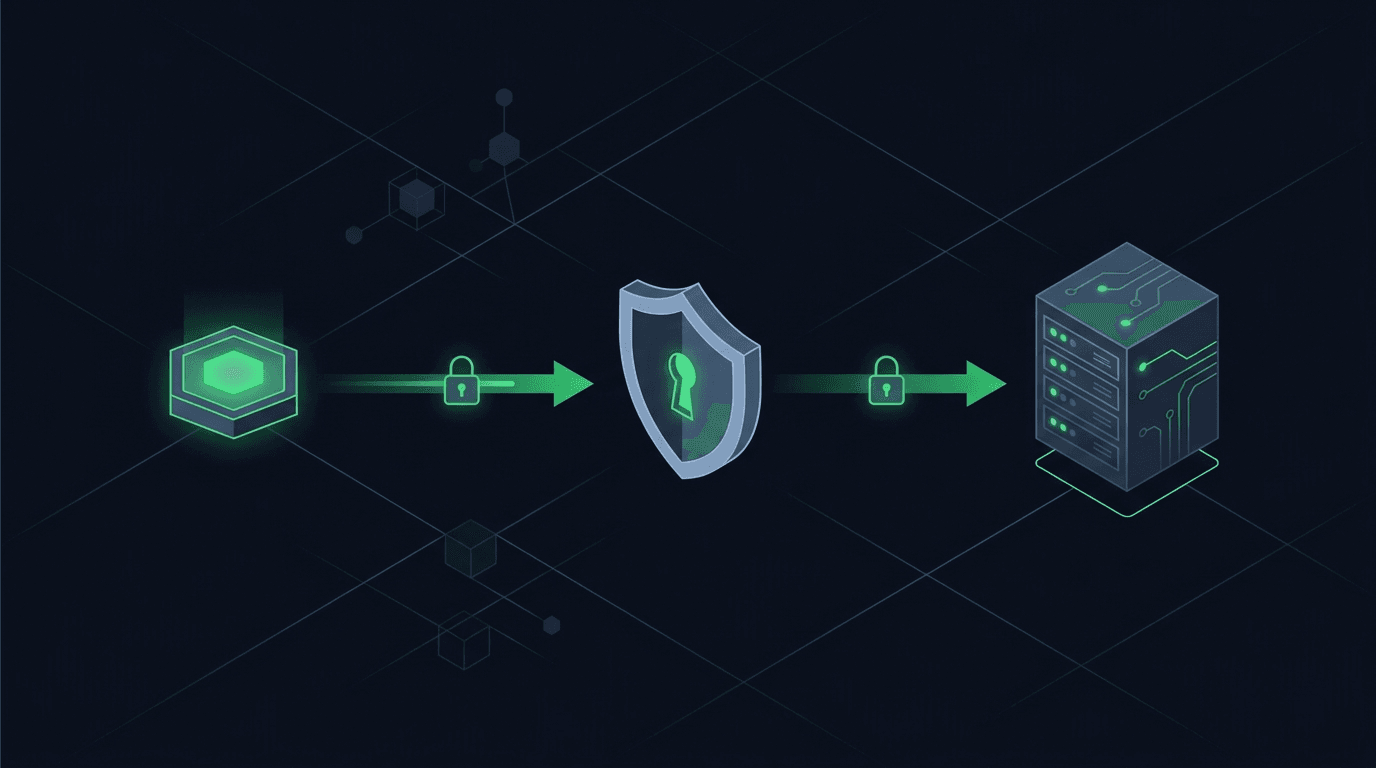
A webhook relay sits between your signal source and your exchange. You keep your strategy in TradingView, connect a trade-only API key from your own exchange, and point your alert at the relay. When the alert fires, the relay validates it and submits the corresponding order to the exchange over the API key you provided. Your funds never move to the relay, and the key you connect cannot withdraw them.
This is the model SignalToExchange is built on. It is not an exchange, a strategy platform, or a signal seller — it is the infrastructure layer between "my alert fired" and "my order landed." You control the logic and hold the funds; the relay handles reliable, low-latency submission. Trade-only keys are central to that: a key scoped to trading can place and cancel orders but has no withdrawal permission, so even in a worst case the relay can never pull coins out. Why trade-only API keys matter covers how to create one correctly.
Moving from a custodial bot platform to a non-custodial relay is a short setup, and none of it involves depositing funds anywhere new:
If you want the full end-to-end version, the TradingView webhook to exchange setup guide walks through each step, and how to send a webhook from TradingView covers the alert side in detail.
Whatever tool you land on, a few habits keep automated execution clean and low-risk from an operational standpoint:
For a broader field of options, the best TradingView automation tools in 2026 compares several honestly, and the Cornix alternative guide covers the same non-custodial approach applied to a different tool.
Yes. Pionex is an exchange with built-in bots, so using it means depositing your funds into a Pionex account that the platform controls. A non-custodial relay is different: your funds stay on the exchange you already use, and the automation only has permission to place trades.
That is the whole point of the model. You keep your Pine Script strategy or indicator in TradingView, attach a webhook alert, and the relay turns each alert into an order on your exchange. Your logic does not change; only the execution step is automated.
The API key you connect is scoped to trading only. A trade-only key can open and cancel orders but has no withdrawal permission, so the relay cannot move funds off your exchange even in principle. Enabling IP allowlisting on the key adds another layer.
Common choices include Binance, Bybit, Kraken, OKX, Coinbase, KuCoin, and Bitget. You hold your funds on whichever one you already use and connect a trade-only key from it.
It removes one specific risk — an automation vendor holding your funds — but it does not remove market risk, exchange risk, or the risk of a poorly designed strategy. Automation makes execution consistent; it does not make trading safe.
The choice between Pionex and a non-custodial relay comes down to which model matches how you trade. If you want a menu of built-in bots and are comfortable holding funds on the platform, an all-in-one exchange is a reasonable fit. If you already generate signals in TradingView and want them executed while your coins stay on an exchange you chose, a relay is the closer match. SignalToExchange exists for that second case: you keep the strategy, you keep the funds, and the relay handles clean order submission. Request access or start your free trial to see how it turns your TradingView alerts into orders.
Automated trading involves risk. SignalToExchange is execution infrastructure and does not provide financial advice, trading signals, or guarantees of any kind.
If you run strategies on TradingView and want your alerts to fire real orders, you have probably looked at 3Commas. It is a capable platform, but many traders...

Weighing a Cornix alternative for automated trading? An honest comparison on signal source, custody, trade-only API keys, and one-signal-one-order execution reliability.

Weighing a WunderTrading alternative for TradingView automation? An honest comparison on custody, trade-only API keys, and one-signal-one-order execution reliability.
Non-custodial execution. Trade-only API keys. Independent infrastructure built for reliability.
Request Early AccessTrade-only API key enforcement. No withdrawal permissions. No custody.