Why You Should Never Put API Keys in TradingView Alert Messages
It is a tempting shortcut. You are wiring up a TradingView strategy to fire orders automatically, the receiving system asks for your exchange credentials, and...
Read more
A leaked exchange API key is a serious security event, but usually a recoverable one. Here is exactly what to do: revoke, check for unauthorized activity, rotate to a trade-only key, and lock down the account.
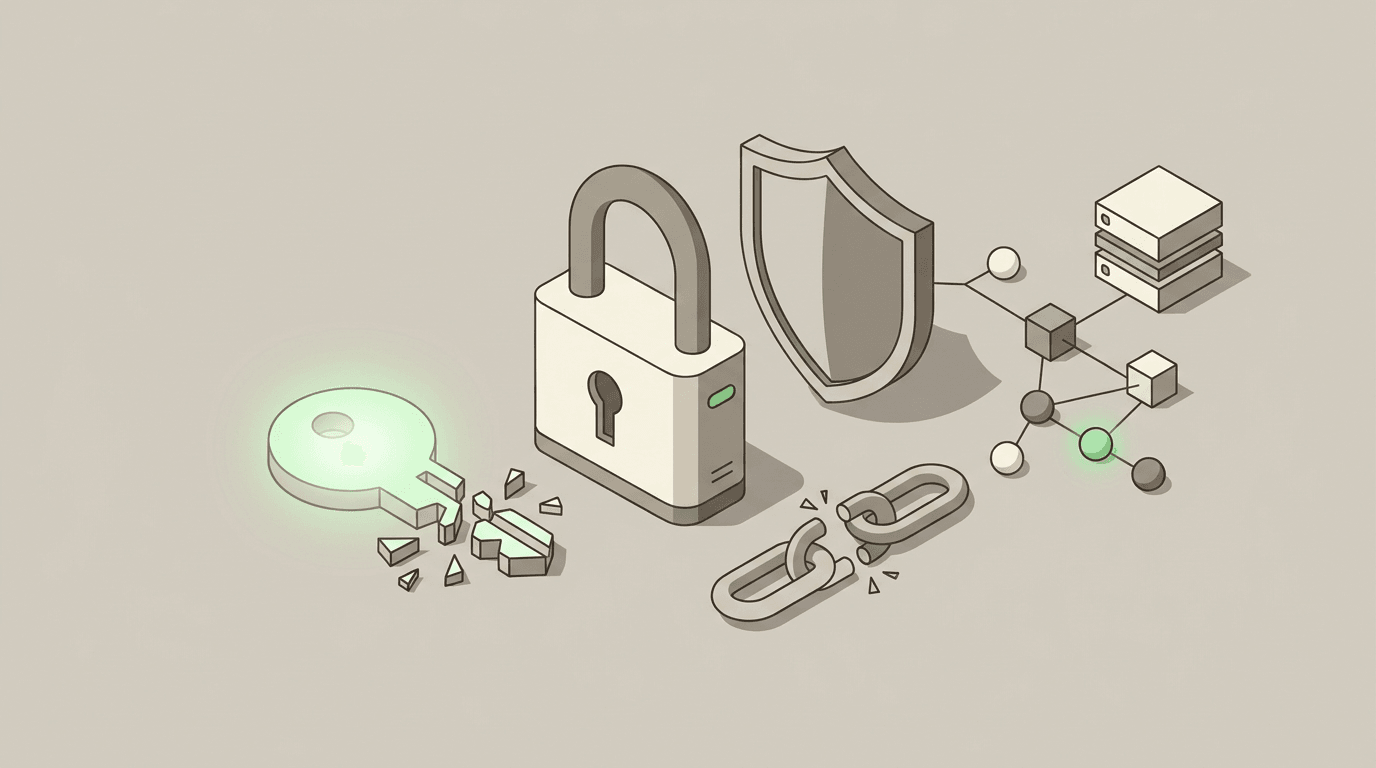
If your exchange API key is leaked, what to do first matters more than anything else: move fast and revoke it. A leaked exchange API key is a serious security event, but for most automated traders it is a recoverable one — especially if the key was trade-only. The moment a secret leaves your control, an attacker may be able to read your balances, place orders, or in the worst case move funds. This guide walks through exactly what to do in the first minutes, how to check for damage, and how to close the gap so it does not happen again.
The good news: a key that can only trade is far less dangerous than a key that can withdraw. The bad news: attackers scan public code, logs, and screenshots constantly, so exposure can turn into abuse within minutes. Treat every suspected leak as real until you have proven otherwise.
Sometimes the leak is obvious — you pasted a key into a public GitHub repo, a support chat, or a screenshot. Other times you notice the symptoms first. Watch for orders you did not place, positions that open or close on their own, API rate-limit warnings from requests you did not send, or login and permission-change emails from your exchange.
Common ways a key escapes: committing a `.env` file to version control, hardcoding secrets in a shared script, logging full request payloads, screen-sharing a dashboard, or storing keys in a note-taking app that later syncs somewhere public. If any of these has happened, assume the key is compromised and act as if it is being used right now.
Speed beats everything else here. Log in to your exchange, open the API management page, and delete or disable the exposed key. This single action stops any attacker who holds the secret cold, because the key is validated on every request. Do this before you investigate, before you clean up your code, and before you tell anyone. Investigation can wait ninety seconds; an active key cannot.
If you use several keys across strategies or exchanges and are unsure which one leaked, revoke the suspect key first, then audit the rest. It is safer to break a running bot for a few minutes than to leave a live secret in the wild.
Once the key is dead, find out what happened while it was live. Review your recent order history, trade history, and open positions on the exchange. Look for anything you did not initiate, unusual pairs, or oversized orders. Check your withdrawal history too — even if the key was trade-only, a broader leak (like your login credentials) could accompany it.
Most exchanges keep an account activity or security log showing logins, IP addresses, and permission changes. Compare those entries against your own usage. If you see withdrawals or settings changes you do not recognize, escalate immediately: contact the exchange's support team, freeze the account if that option exists, and change your account password and two-factor method.
With the leaked key revoked and the account checked, issue a fresh key so your automation can resume. Generate a new key, grant it only the permissions your workflow actually needs, and store the secret in a proper secrets manager or environment variable — never in code, chat, or a screenshot. This is the same discipline you should follow on a normal schedule; our guide on how and when to rotate your exchange API keys covers a routine that makes an emergency rotation feel like muscle memory.
When you re-issue, resist the urge to grant broad permissions "to be safe." The opposite is true. A tightly scoped key is your smallest possible blast radius. If you are unsure which permissions a relay actually requires, crypto exchange API key permissions explained breaks down the read, trade, and withdraw scopes and what each one exposes.
A leaked key is often a symptom of a wider gap. Close the surrounding holes so one exposed secret cannot cascade into a full account takeover. Confirm that withdrawal permissions are disabled on every automation key. Enable and verify two-factor authentication on the account itself. Where your exchange supports it, restrict API access to specific server IP addresses so a stolen key is useless from anywhere else.
Two related guides go deeper here: why 2FA on your exchange matters when you automate trading and the trade-offs in IP allowlisting vs VPNs for exchange API access. Layering these controls means a single leak is contained rather than catastrophic.
The single biggest factor in how bad a leak gets is what the key was allowed to do. A trade-only key can open and close positions, but it cannot move your coins off the exchange. That distinction is the whole point of a non-custodial approach to automation: your funds stay in your own exchange account, and the only power you delegate is the power to place orders.
SignalToExchange is built around exactly this model. It never asks for withdrawal access and never takes custody of your funds — it submits orders on your behalf using trade-only keys, and nothing more. A leak of a trade-only key is a bad day, not a wiped account. It still needs to be revoked and rotated, but the attacker cannot walk away with your balance.
Recovery is reactive; the real win is not leaking in the first place. Build these habits into your workflow so a compromised key becomes a near-miss instead of an incident:
None of these steps is complicated on its own. Together they turn key security from a source of anxiety into a routine part of running automated trades.
Within minutes. Automated scanners watch public repositories and paste sites and test discovered credentials almost instantly. Do not wait to see whether anything happens — revoke first, investigate second.
No. A trade-only key has no withdrawal permission, so it cannot move funds off the exchange. That is why disabling withdrawal on automation keys is the most important setting you control. The key should still be revoked and replaced.
If only the API key leaked and nothing else, revoking and rotating the key is usually enough. But if you suspect your login credentials were exposed too — or you see unfamiliar logins in the activity log — change your password and reset two-factor authentication right away.
Temporarily, yes. Any bot or relay using that key will stop placing orders until you issue a new one and update the configuration. That brief interruption is a small price compared with leaving a live secret exposed.
A leaked exchange API key is stressful, but the response is straightforward: revoke the key, check for unauthorized activity, rotate to a fresh trade-only key, and tighten the account around it. The traders who recover cleanly are the ones who prepared in advance — withdrawal disabled, 2FA on, IPs restricted, secrets stored properly.
If you want automation that is designed to keep leaks survivable by default, take a look at how SignalToExchange routes signals to your exchange using trade-only keys and non-custodial architecture. Request access / start your free trial and put your keys behind infrastructure built to contain this exact scenario.
Automated trading involves risk. SignalToExchange is execution infrastructure and does not provide financial advice, trading signals, or guarantees of any kind.
It is a tempting shortcut. You are wiring up a TradingView strategy to fire orders automatically, the receiving system asks for your exchange credentials, and...
You wire up a strategy, connect an API key, and let the automation run. It works. But the orders are landing on the same exchange account that holds your long-t...

When you automate crypto trading, your exchange account stops being something you log into by hand and becomes something software touches around the clock. That...
Non-custodial execution. Trade-only API keys. Independent infrastructure built for reliability.
Request Early AccessTrade-only API key enforcement. No withdrawal permissions. No custody.