WebSocket vs REST APIs on Crypto Exchanges: What's the Difference
If you are wiring a strategy up to an exchange, one of the first technical forks you hit is WebSocket vs REST APIs on a crypto exchange. Both let your code talk...
Read more
Perpetual funding rates quietly change the cost of every automated futures order you hold. Learn what funding is, when it is charged, and how to account for it in an automated crypto execution workflow.

If you automate crypto trades on perpetual contracts, a recurring cost sits quietly underneath every position you hold: the funding payment. Perpetual funding rates decide who pays whom, and how often, for keeping a leveraged futures position open. A manual trader who opens and closes in minutes can ignore it. For automated futures orders that fire on a schedule and hold across hours or days, funding is a real, repeating line item that shapes the true cost of a strategy. This guide explains what a perpetual funding rate is, when it is charged, and how to account for it in an automated execution workflow.
None of this is trading advice — it is a mechanics explainer so your automation behaves predictably around a cost many bots silently absorb.
A perpetual contract, or "perp," is a futures contract with no expiry date. Because it never settles, exchanges need a mechanism to keep its price tethered to the underlying spot market. That mechanism is funding: a small periodic payment exchanged directly between traders who are long and traders who are short.
The funding rate is a percentage applied to your position's notional value. When it is positive, longs pay shorts; when it is negative, shorts pay longs. The exchange does not take this payment — it simply moves value between the two sides so holding the perp stays in line with holding spot. If the perp trades above spot, funding turns positive to discourage longs; below spot, it turns negative to discourage shorts.
The key word is periodic. Unlike a one-time entry commission, funding is charged again and again for as long as your position stays open across funding timestamps.
Most exchanges settle funding at fixed times — commonly every eight hours, though some venues use one- or four-hour intervals. The critical detail for automation: you only pay or receive funding if your position is open at the exact funding timestamp. Open one minute after a timestamp and close one minute before the next, and you pay nothing, no matter how large the position was in between.
That rule changes how an automated system should think about timing. A bot that opens positions seconds before a timestamp will pay or collect funding far more often than one that opens just after — a difference that stays invisible unless your automation tracks the funding clock. It is the same kind of hidden, timing-driven cost as maker vs taker fees: small per event, meaningful in aggregate.
Automation amplifies funding exposure for three structural reasons.
Automated strategies do not get tired. A trend-following bot can hold one position across many funding intervals, and each interval applies the rate again. A position held for two days on an eight-hour cycle crosses six funding timestamps — the headline rate looks tiny, but it stacks across every crossing for as long as the position lives.
Because longs and shorts sit on opposite sides of the payment, the same market can be a cost for one side and a credit for the other. A system that trades both directions will sometimes receive funding and sometimes pay it, depending on which side it is on when the timestamp hits. Modeling funding as a flat cost misses that it can flip sign with your position.
Funding is charged on notional value, not on the margin you posted. Higher leverage means a larger notional for the same collateral, and therefore a larger funding payment for the same rate. A strategy running elevated leverage feels funding far more sharply than one sized close to spot-equivalent.
Funding does not change how an order is placed, but it changes what an order is worth to hold. The cost of crossing the spread — the difference explained in market vs limit orders — is a one-time entry cost. Funding is the ongoing carry cost layered on top of it.
A strategy that uses time in force settings such as GTC, IOC, and FOK to control how long resting orders live is managing entry behavior; funding governs holding behavior once filled. Treat them as separate cost surfaces rather than one "fees" number.
Funding is also a perpetual-futures concept specifically: route the same signal to a spot venue and there is no funding at all — a distinction worth keeping straight in multi-venue logic, as covered in spot vs futures automation.
Every major exchange publishes the current and predicted funding rate through its API, usually alongside mark price and the next funding timestamp. An automation layer can read those fields and use them as context.
A funding-aware system might record the rate and next timestamp when it opens a position, annotate each executed order with the funding conditions at fill time, and surface funding as its own monitoring metric, separate from spread and commission — so a strategy quietly bleeding on carry is visible early rather than after the fact.
What a relay layer should not do is make directional decisions for you based on funding. Whether a funding condition is worth holding through is strategy logic — it belongs in the system that generates your signals, not the plumbing that submits the order.
SignalToExchange is a non-custodial webhook relay: it receives your trading signal and submits the corresponding order to your exchange over trade-only API keys — no withdrawal access, and your funds never leave your account. It does not set your leverage, choose your side, or judge whether a funding condition is acceptable; those are strategy choices you own. It executes the order you asked for, reliably and with low latency, and gives you a clean record of what was sent and when.
That separation is deliberate. You manage funding through position sizing, holding logic, and venue selection in the system that generates your signals. The relay's job is to ensure that when your logic fires, exactly one order reaches the exchange — so the funding you pay or receive follows from your decisions, not a missed or duplicated fill. For the full division of labor, see signals vs execution.
No. Funding is only settled if your position is open at the funding timestamp. If your automation opens and closes entirely between two timestamps, no funding is exchanged, regardless of position size.
Yes. Funding moves between longs and shorts: positive rates mean longs pay shorts, negative rates mean shorts pay longs. Whether it is a cost or a credit depends on which side you are on at settlement.
No. Funding is specific to perpetual futures, which have no expiry and therefore need funding to stay tethered to spot. Spot positions have no funding mechanism at all.
Funding is charged on notional value, not on your margin. Because leverage increases notional for the same collateral, a higher-leverage position pays more funding for the same rate than a lower-leverage one.
That is a strategy decision, not an execution one. A relay layer submits the orders your signals produce; whether funding conditions should influence those signals belongs in the system where you build your strategy.
Funding is one of several quiet costs that separate a strategy that looks good on paper from one that behaves the same way live. You cannot control the rate, but you can control whether your execution is clean, auditable, and predictable around it. Keep your logic in your strategy layer, keep your funds on your own exchange, and let a dedicated relay handle the order. Request access or start your free trial with SignalToExchange.
Automated trading involves risk. SignalToExchange is execution infrastructure and does not provide financial advice, trading signals, or guarantees of any kind.
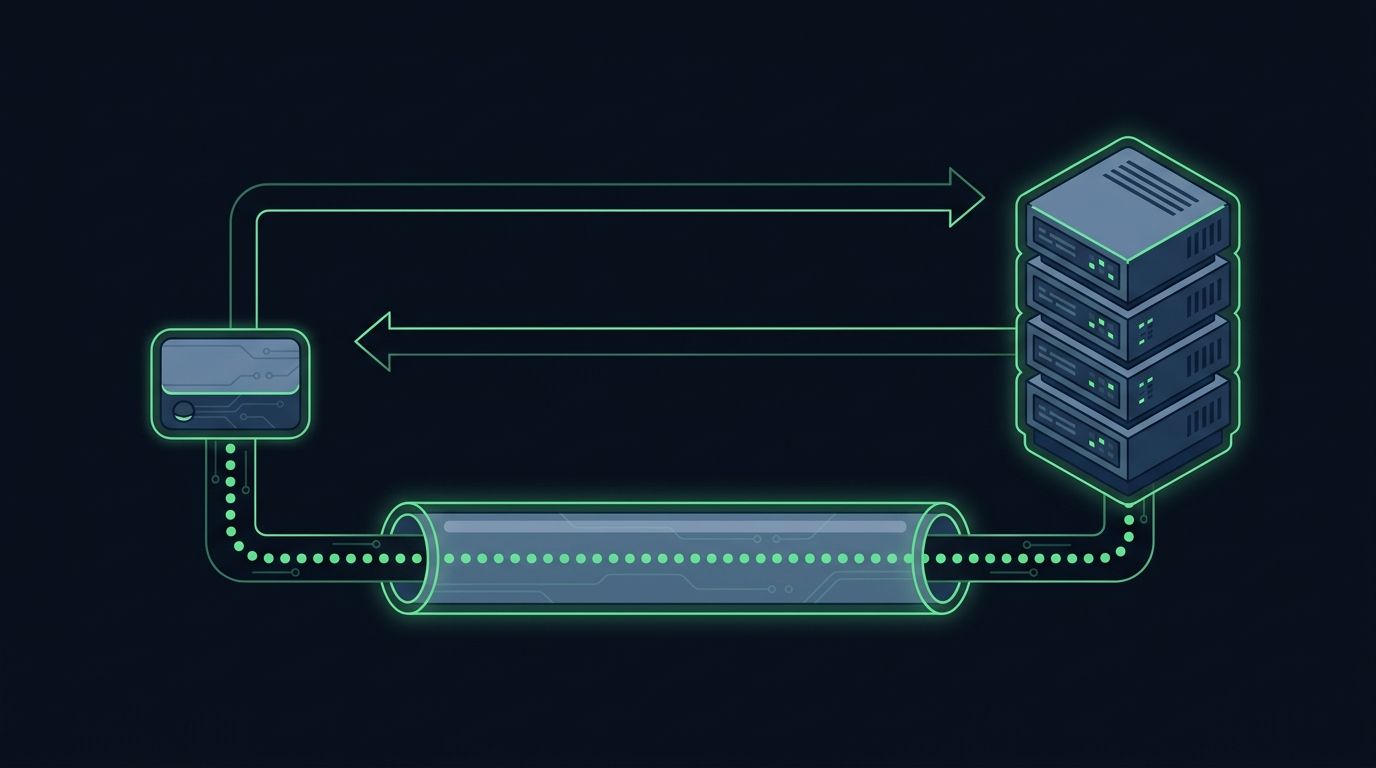
If you are wiring a strategy up to an exchange, one of the first technical forks you hit is WebSocket vs REST APIs on a crypto exchange. Both let your code talk...

You send an order to buy one Bitcoin, and the exchange fills 0.4 of it. The rest sits open, or gets cancelled, or fills seconds later at a worse price. If your...
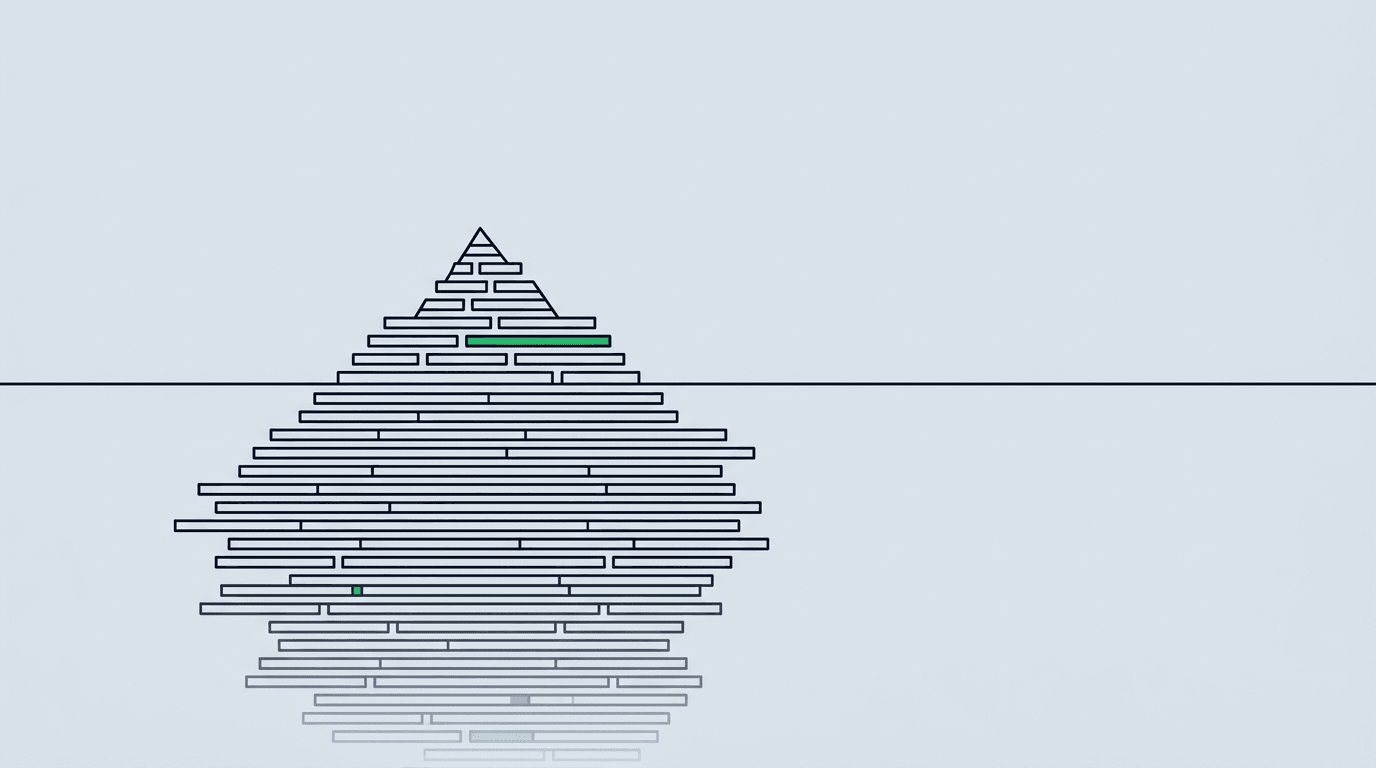
Watch a crypto order book long enough and you will see something odd. A price level shows only a modest amount of size, you send orders into it, and yet the le...
Non-custodial execution. Trade-only API keys. Independent infrastructure built for reliability.
Request Early AccessTrade-only API key enforcement. No withdrawal permissions. No custody.