What Is a Conditional (Trigger) Order and How Automation Uses It
You set up a strategy that should only act when the market reaches a specific level — buy if price breaks above resistance, or exit if it falls through support....
Read more
Crypto trades every hour of every day. Here is how a 24/7 market changes automated trading execution, where the hidden risks live, and the process habits that keep unattended automation reliable.
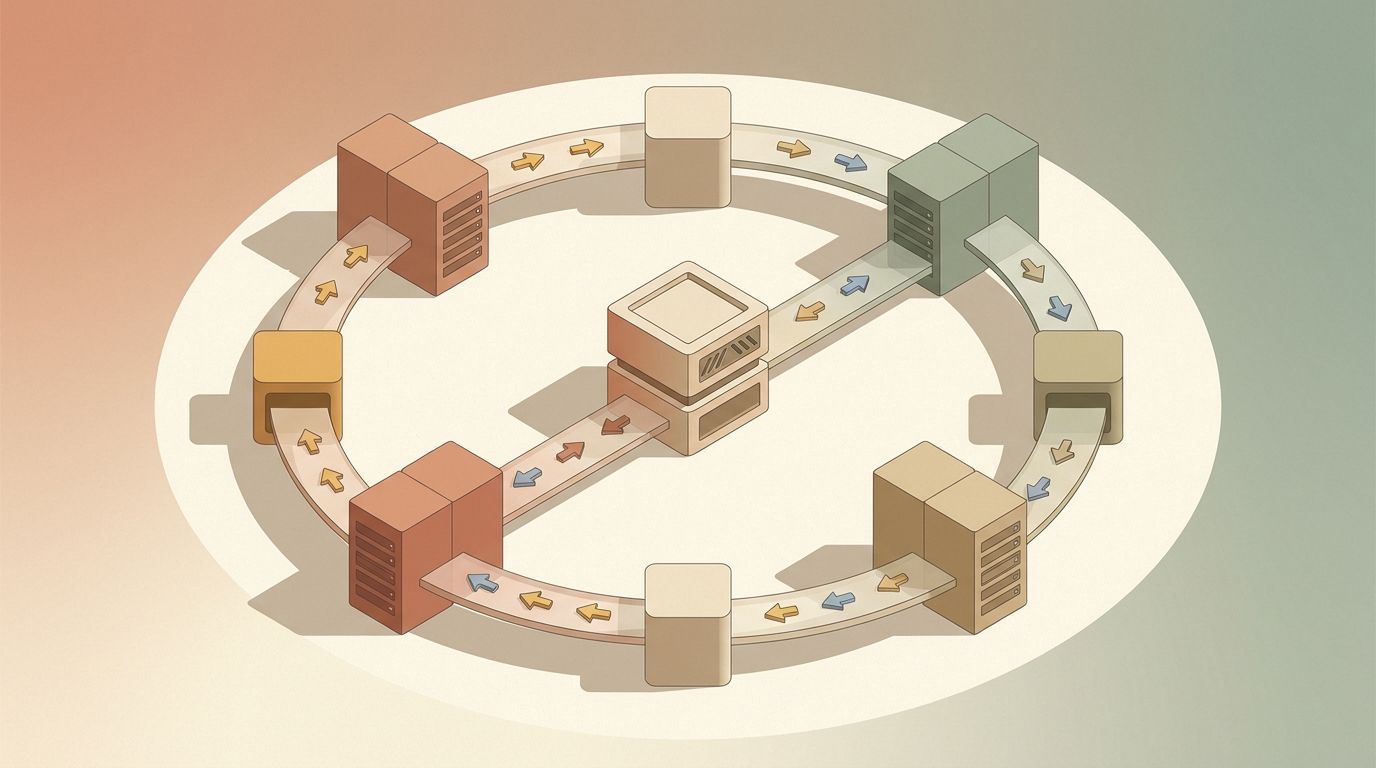
Traditional markets close. Crypto does not. Bitcoin, Ether, and thousands of other pairs trade every hour of every day, including weekends and holidays. That single fact reshapes how you approach crypto market 24/7 automation: your strategy can fire a signal at 3 a.m. on a Sunday, and something has to be ready to act on it. When you automate trading around the clock, the question stops being "what should I trade?" and becomes "what runs reliably while I am asleep, offline, or simply not watching?"
This guide walks through what an always-on market changes about automated execution, where the hidden risks live, and the process-level habits that keep unattended automation dependable. It is about the mechanics of execution, not about what to buy or sell.
In equities, an alert that fires after hours waits for the opening bell. There is a natural buffer between decision and execution. Crypto removes that buffer entirely. A signal generated at any moment is immediately actionable, which means the gap between "signal generated" and "order submitted" is exposed at all times.
For manual traders, this is exhausting and impractical. Nobody can watch charts 168 hours a week. Automation exists precisely to close that gap: it listens for a signal and submits an order without a human present. But an always-open market also means your automation has no downtime window to fail safely in. There is no overnight pause to catch a stuck process, no weekend to redeploy a broken webhook. Whatever you build has to be dependable continuously.
The most obvious change is timing. Your best setups will not politely appear during working hours. Volatility clusters around news, funding resets, and liquidity shifts that happen across every timezone. If your execution layer is a laptop script that only runs when your machine is awake, you will miss fills, or worse, submit them late.
Late execution is not a cosmetic problem. The price you saw when the signal formed may be gone by the time a delayed system reacts. This is why latency in automated crypto trading matters more here than in slower markets: the same millisecond delays repeat around the clock, and off-hours moves can be sharp. Automation that only works when you are at your desk is not really automation; it is a scheduled reminder.
A 24/7 market does not mean a uniform market. Liquidity is not constant across the week. Order books can thin out during low-activity windows, spreads can widen, and a market order that would fill cleanly on a busy weekday afternoon can slip further during a quiet weekend night.
Your automation has to account for that variability rather than assume every hour looks the same. That does not mean predicting when liquidity will thin, which no one can do reliably. It means building execution that behaves sensibly regardless: understanding order types, respecting slippage tolerances where your exchange supports them, and knowing how your chosen order behaves when the book is thin. The point is to make the execution path robust to conditions you did not personally observe.
Because crypto exchanges never get a natural closing bell, they perform maintenance while the market is technically live. Scheduled upgrades, unplanned degradations, and API rate-limit changes can all land while your automation is mid-flow. An alert can fire during a maintenance window and hit an endpoint that is temporarily unavailable.
Robust automation treats exchange availability as something that changes, not something to take for granted. It handles rejected or delayed responses gracefully instead of assuming every request succeeds. We cover the specifics of that scenario in what happens to automated orders during exchange maintenance windows, but the core lesson for an always-on market is simple: your system will eventually send an order into an exchange that is not ready, so it needs a plan for that moment.
In a market that never sleeps, the failure you do not see is the expensive one. A webhook that silently stops delivering, an API key that expires, a process that crashes at 2 a.m., all of these can go unnoticed for hours if nothing is watching the watcher.
That is why unattended automation needs observability built in. You want to know when a signal was received, whether an order was submitted, and whether the exchange acknowledged it, without having to reconstruct events after the fact. Setting up monitoring and alerting for automated trading systems is not optional in a 24/7 context; it is the difference between catching a stalled pipeline in minutes versus discovering it a day later. Resilient retries and sensible timeouts, covered in our guide to making automated orders resilient, are the other half of the same idea.
Running continuously does not have to mean running recklessly. The habits below keep an always-on pipeline dependable without asking you to babysit it:
The paradox of 24/7 automation is that you want the machine to act on your behalf without handing it the keys to your money. This is where the non-custodial model matters. Your funds stay on your own exchange, and your automation connects through trade-only API keys that can submit orders but cannot withdraw a single coin.
That separation is what makes unattended, around-the-clock execution reasonable rather than reckless. You keep control of your funds and your logic; the relay layer handles the mechanical job of turning each signal into an order. SignalToExchange was built for exactly this division of labor: you own the strategy and the custody, and the infrastructure reliably executes what your signals tell it to, whether it is midday or the middle of the night.
Not necessarily. Some traders restrict their strategies to specific sessions. But if your strategy can generate a signal at any hour, your execution path has to be available at any hour, or you will get inconsistent, partial coverage.
The market's hours do not remove risk, and automation does not either. A 24/7 market simply means execution failures and volatility can happen when you are not watching, which is why reliability, monitoring, and tight API permissions matter so much.
Assuming their laptop or home connection is a reliable execution environment. Consumer machines sleep, lose connectivity, and restart. Dedicated, always-on relay infrastructure is what keeps signal-to-order execution consistent.
They let a system place and manage orders while making withdrawals impossible. So even if you leave automation running for weeks, the worst-case scope of a compromised key is limited to trading actions, never moving your balance off the exchange.
Automating an always-open market is less about clever timing and more about dependable, observable, permission-scoped execution that runs whether or not you are at the keyboard. Get those fundamentals right and the 24/7 nature of crypto becomes an advantage instead of a liability. If you want a non-custodial relay that turns your signals into exchange orders around the clock, you can request access and start your free trial to see how the execution layer works with your existing strategy.
Automated trading involves risk. SignalToExchange is execution infrastructure and does not provide financial advice, trading signals, or guarantees of any kind.

You set up a strategy that should only act when the market reaches a specific level — buy if price breaks above resistance, or exit if it falls through support....
If you automate futures trading, you have probably noticed something confusing: your chart shows one price, but your position's liquidation level and profit-and...
You set a take-profit and a stop-loss on the same position, walk away, and expect the exchange to close the trade at whichever level hits first. On most exchan...
Non-custodial execution. Trade-only API keys. Independent infrastructure built for reliability.
Request Early AccessTrade-only API key enforcement. No withdrawal permissions. No custody.