A Non-Custodial Alternative to 3Commas for TradingView Automation
If you run strategies on TradingView and want your alerts to fire real orders, you have probably looked at 3Commas. It is a capable platform, but many traders...
Read more
Looking for a 3Commas alternative for TradingView automation? How a non-custodial signal execution layer compares on custody, trade-only API keys, and reliable order routing.

If you automate crypto trades from TradingView, you have probably used or evaluated 3Commas — and if you are reading this, you are weighing a 3Commas alternative. The reason is usually the same: 3Commas is a broad, all-in-one bot platform, but many traders want something narrower and more transparent — a tool that simply takes a signal and places the matching order, without holding funds or bundling in features they will never use. This guide compares the two honestly on the dimensions that matter once you are about to connect exchange API keys: custody, key permissions, execution reliability, and how each tool is built.
We will not tell you which strategy to run or promise any outcome. The goal is to help you choose the execution layer that fits how you trade.
3Commas and SignalToExchange sit in the same category at a high level: you connect an exchange, point a TradingView webhook (or another signal source) at the platform, and incoming alerts become orders on your exchange. Neither one sells signals — you bring your own strategy. The difference is scope. 3Commas is a large platform with DCA bots, grid bots, a marketplace, a portfolio dashboard, and more. SignalToExchange is deliberately smaller: it is execution infrastructure whose single job is to turn a structured signal into a correctly formatted, deduplicated order.
That difference in scope is the real decision. A broad suite can do more out of the box. A focused execution layer has a smaller surface area to understand, secure, and trust. Which one fits depends on whether you want a feature platform or a dependable pipe between your existing setup and your exchange.
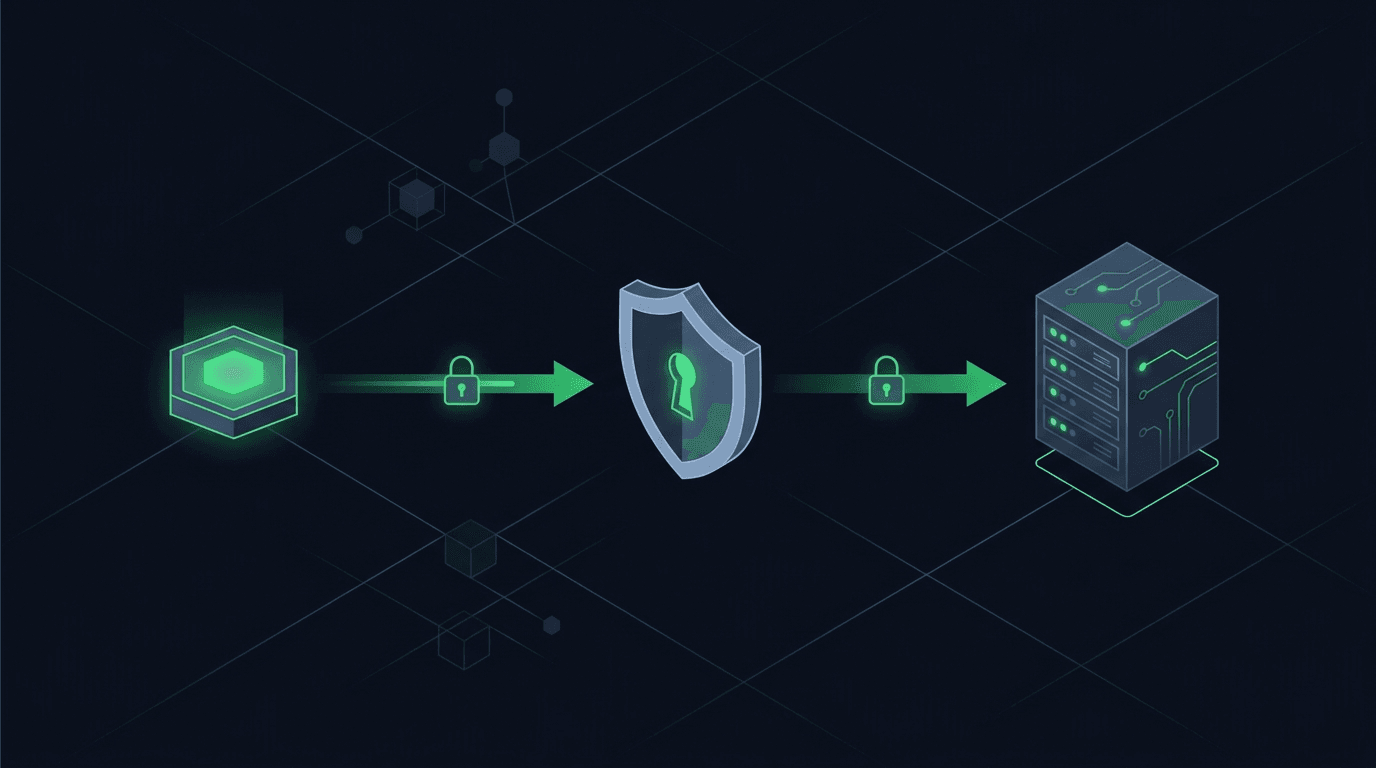
The first question for any automation tool is custody. A non-custodial tool never holds your assets — your funds stay in your own exchange account, and the tool only sends orders. SignalToExchange is non-custodial by design: your funds never leave your exchange. It connects through the exchange API and places orders; it never takes deposits or holds balances.
This is worth confirming for any tool you evaluate, 3Commas included. Check whether the platform ever asks you to deposit funds onto it, and whether the connection is purely API-based. Handing over custody is a different and higher-trust decision than granting connectivity. We cover the distinction in depth in custodial vs non-custodial trading bots.
Closely related to custody is what your API key is allowed to do. Exchanges let you scope a key to read, trade, and withdraw permissions independently, and the exchange itself enforces those limits — not the software holding the key.
SignalToExchange is built around trade-only keys: it places orders, never withdrawals. An execution layer has no legitimate need for withdrawal permission, so the safest setup is a key scoped to trading only, with withdrawal explicitly disabled. Then the worst case for a compromised key is unwanted orders — bounded and visible — rather than drained funds. Whichever tool you use, create a dedicated trade-only key and leave withdrawal off; here is how to set up trade-only API keys, and a fuller look at whether it is safe to give a trading bot your API keys.
This is where execution layers quietly differ the most, and it is the hardest dimension to judge from a landing page. When the same alert reaches the platform twice — because TradingView retried, or a network blip caused a duplicate — what happens? An unreliable layer can place the order twice. A reliable one recognizes the duplicate and does nothing.
SignalToExchange treats this as a first-class concern. Every signal carries an idempotency key, so one signal fires exactly one order, even under retries. Orders are dispatched through pooled, low-latency connections using a stable client order ID derived from the signal, so duplicates are rejected at the source. If you have ever had a webhook double-fire, you know why this matters: the cost of a missing safeguard here is a real, unintended position.
3Commas positions itself as a no-code, all-in-one trading platform with a wide feature set. SignalToExchange positions itself narrowly, as infrastructure: a small, reliable job done well — take a structured signal, validate it against your per-user rules, and route it to the exchange with predictable latency. That focus shows up in the engineering choices: per-user rule evaluation, encrypted key storage using KMS-backed envelope encryption, idempotent dispatch, and observability on order latency. If you want a large built-in toolkit, a broader product may suit you. If you primarily want a secure, dependable connection between TradingView and your exchange, that is the gap SignalToExchange is built to fill.
When comparing any 3Commas alternative, including ours, run the same questions for each option:
3Commas and SignalToExchange solve the same problem from different angles: 3Commas as a broad no-code suite, SignalToExchange as focused, non-custodial execution infrastructure built around trade-only keys, idempotent dispatch, and encrypted key storage. Neither one picks or judges your strategy — that stays with you. The better choice is the one whose custody model, key handling, and reliability behavior match how seriously you take execution.
If you want to see how secure, idempotent routing works end to end, start with our TradingView webhook to exchange setup guide, or Request access / start your free trial →
Automated trading involves risk. SignalToExchange is execution infrastructure and does not provide financial advice, trading signals, or guarantees of any kind.
If you run strategies on TradingView and want your alerts to fire real orders, you have probably looked at 3Commas. It is a capable platform, but many traders...

If you have searched for a non-custodial Pionex alternative, you are probably weighing a real trade-off: Pionex bundles trading bots and an exchange into one a...

Weighing a Cornix alternative for automated trading? An honest comparison on signal source, custody, trade-only API keys, and one-signal-one-order execution reliability.
Non-custodial execution. Trade-only API keys. Independent infrastructure built for reliability.
Request Early AccessTrade-only API key enforcement. No withdrawal permissions. No custody.