Why You Should Never Put API Keys in TradingView Alert Messages
It is a tempting shortcut. You are wiring up a TradingView strategy to fire orders automatically, the receiving system asks for your exchange credentials, and...
Read more
Automated trading needs funds it can reach instantly, but the whole point of a cold wallet is that nothing can. Here is what hot and cold wallets actually are, why automation changes the calculation, and a practical tiered split that keeps your bot's reachable balance small, trade-only, and contained.

If you automate trades, the hot wallet vs cold wallet question stops being theory and becomes an operational decision you make with real money. Automated trading needs funds that are reachable the instant a signal fires, and the whole appeal of a cold wallet is that nothing can reach it quickly. Those two facts pull in opposite directions. This guide explains what each wallet type actually is, why automation changes the maths, and a practical way to split your funds so the balance your bot can touch is small, deliberate, and contained.
A hot wallet is any wallet whose private keys are held on an internet-connected system. That includes the software wallet on your phone, a browser extension wallet, and the balance sitting in your account on a crypto exchange. The defining trait is availability: because the keys are online, funds can move the moment a valid instruction arrives.
That availability is exactly what makes hot wallets useful for trading and exactly what makes them the bigger target. If an attacker compromises the device, the session, or the credentials that control a hot wallet, they can move funds without physical access to anything. Hot does not mean careless, but it does mean exposed to a wider set of online threats than a wallet that never touches a network.
A cold wallet keeps its private keys on a device that is never connected to the internet during normal use. Hardware wallets are the common example: the signing keys live on a dedicated device, and a transaction is only signed when you physically confirm it on that device. Paper wallets and air-gapped machines are colder still.
The strength of cold storage is isolation. An attacker who compromises your laptop cannot drain a hardware wallet, because the keys never leave the device and every outbound transaction requires a manual button press. The cost of that strength is friction: moving funds is a deliberate, hands-on act. That friction is a feature for savings and a blocker for anything automated.
Every wallet choice sits on a single spectrum between availability and isolation, and you cannot maximise both at once. Hot wallets give you availability — funds ready to trade on a signal — in exchange for a larger online attack surface. Cold wallets give you isolation — keys unreachable from the network — in exchange for instant access.
Automated trading lives on the availability end by necessity. A signal that fires when your capital is in cold storage is a signal that does nothing, because no bot can press the confirmation button on a hardware wallet for you. So the real question is not "hot or cold" but "how much belongs on the hot side, and how do you contain the risk of the part that has to be there."
Manual traders can keep most funds cold and move small amounts to a hot wallet only when they intend to trade. Automation removes that human step. The point of a relay or bot is that trades happen without you present, which means the tradable balance has to sit hot, all the time, waiting.
That has two consequences worth naming. The hot balance is persistent, not momentary, so its exposure is continuous rather than occasional. And the access path is programmatic: an API key, not a person, controls that balance, so key handling becomes the centre of your security model. Automation rewards traders who decide in advance exactly how much capital is allowed to be reachable.
Most automated crypto trading happens on funds held in an exchange account, and it helps to be honest about what that is. When your balance sits on an exchange, it is in the exchange's hot wallet, and you hold a claim to it rather than the keys themselves. This is exchange custody, and it carries its own trade-offs; our guide to self-custody versus exchange custody for automated traders walks through them in detail.
The practical takeaway is this: the balance you leave on an exchange to be traded is a hot balance whose security depends partly on the exchange and partly on how you control access to it. You reduce that dependence two ways — by keeping the traded balance small relative to your total holdings, and by ensuring the automation that reaches it can only trade, never withdraw.
The most important control for an automated trader is the permission scope of the API key that touches the hot balance. An exchange API key can be scoped: read-only, trade-enabled, or withdrawal-enabled. Automated execution needs the trade permission and nothing more. A key that can place orders but cannot withdraw means that even a total compromise of your automation cannot move your funds off the exchange — the worst case is unwanted trades, not stolen capital. We cover the setup in why trade-only API keys matter and how to set them up.
This is where a non-custodial relay changes the picture. A non-custodial service never holds your funds and never takes custody of your keys; it receives your signal and submits an order to your exchange using a trade-only key you control. Your capital stays in your own exchange account the entire time. SignalToExchange is built this way on purpose: the relay can trade the hot balance on your exchange but has no withdrawal access and no ability to move funds anywhere. If the term is new, what non-custodial actually means for your trades explains it plainly.
A workable structure treats your holdings as tiers rather than one pool. The cold tier holds the majority of your capital in a hardware or air-gapped wallet that no automation can reach — the money you are not actively trading, isolated from every online system by design.
The hot trading tier holds only the working capital your strategy needs to operate, in the exchange account your automation trades against, controlled by a trade-only key. Size it to the position sizing and drawdown your strategy actually requires, not to your whole net worth. Top up that tier from cold storage deliberately and periodically, rather than parking everything hot for convenience.
The principle underneath both tiers is containment: decide the maximum you are willing to have reachable by software, keep the rest unreachable, and make the reachable portion trade-only.
The capital your automation actively trades has to be in a hot location — an exchange account it can reach through an API key — because a bot cannot access cold storage. Everything beyond that working balance is better kept cold. The goal is to make the hot portion as small as your strategy allows and to keep it trade-only.
No, and that is the point of cold storage. A hardware or air-gapped wallet requires manual, physical confirmation to sign a transaction, so no automated system can move those funds. That is why the tradable balance must sit in a hot location while the rest stays cold.
Yes. Funds held on an exchange sit in the exchange's hot wallet, and you hold a claim rather than the private keys. That balance is reachable online, so treat it as your hot tier: keep it sized to your trading needs and control access with trade-only keys.
Scope the API key to trade-only so it cannot withdraw, keep the traded balance small relative to your total holdings, use a separate key per system, and enable IP allowlisting and two-factor authentication. A non-custodial relay helps because your funds never leave your own account.
The hot wallet vs cold wallet decision is not a binary for automated traders — it is a sizing exercise. Keep the bulk of your capital cold and unreachable by any software, keep a deliberately small working balance hot so your automation can actually execute, and make sure the only thing reaching that hot balance is a trade-only key that cannot withdraw.
SignalToExchange is a non-custodial relay built for exactly that model: your funds stay on your exchange, your keys are trade-only with no withdrawal access, and the relay simply turns your signal into an order. Request access or start your free trial to see how it fits the wallet structure you already run.
Automated trading involves risk. SignalToExchange is execution infrastructure and does not provide financial advice, trading signals, or guarantees of any kind.

It is a tempting shortcut. You are wiring up a TradingView strategy to fire orders automatically, the receiving system asks for your exchange credentials, and...
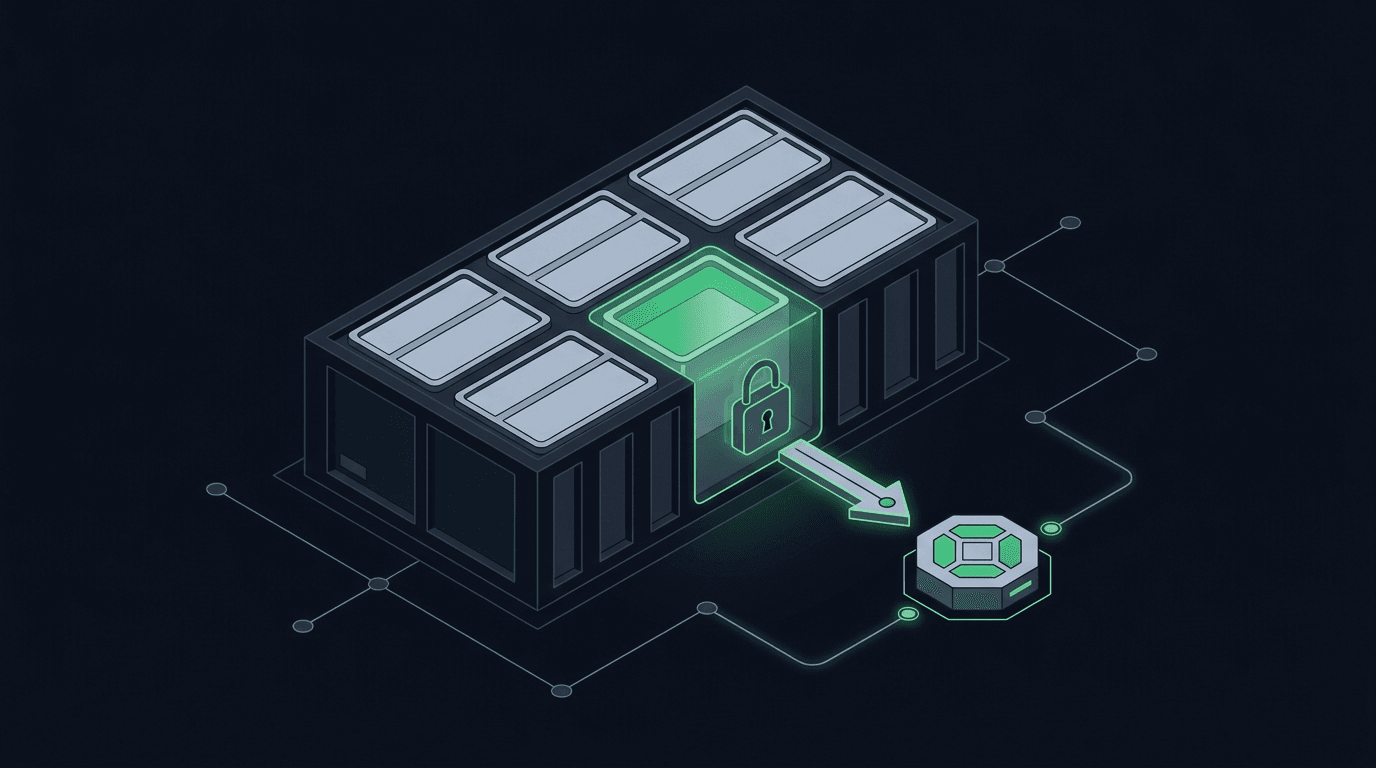
You wire up a strategy, connect an API key, and let the automation run. It works. But the orders are landing on the same exchange account that holds your long-t...

When you automate crypto trading, your exchange account stops being something you log into by hand and becomes something software touches around the clock. That...
Non-custodial execution. Trade-only API keys. Independent infrastructure built for reliability.
Request Early AccessTrade-only API key enforcement. No withdrawal permissions. No custody.