How to Automate a DCA Strategy From TradingView Webhook Alerts
If you run a DCA strategy, TradingView webhook alerts can execute it for you so you are not logging in to place the same buy over and over. Dollar-cost averagi...
Read more
Moving from testnet vs live automated trading is the riskiest step in any bot's life. Here is a practical, security-first checklist for pointing your automation at real funds without surprises.

The hardest moment in building a trading bot is not writing the strategy or wiring the webhook. It is the day you switch it from testnet vs live automated trading and point it at real money for the first time. On a testnet, a bug costs you nothing. On live, the same bug moves actual funds on your exchange. That single change of destination raises the stakes on every line of logic you have written, and it deserves a deliberate process rather than a hopeful flip of a switch.
This guide explains what testnet and live environments actually are, why the gap between them is wider than it looks, and how to cross it in controlled steps. It assumes you already have automation running against a testnet or paper environment and now want to run it on real funds without nasty surprises.
A testnet is a sandbox version of an exchange. It behaves like the real platform — same order types, similar API, similar responses — but the balances are fake. You fund a testnet account with play money the exchange hands out, and you can fire thousands of orders without financial consequences. Most major venues offer one: Binance Testnet, Bybit Testnet, and equivalents elsewhere.
Live is the production exchange, running against your real balance. The API endpoints are different, the API keys are different, and every order that fills changes what you actually own. The code path can be nearly identical, but the consequences are not.
The purpose of a testnet is to prove that your automation is mechanically correct: signals arrive, orders are formed properly, the exchange accepts them, and your system handles the responses. What a testnet cannot prove is how that same automation behaves when real liquidity, real fees, and real emotions enter the picture. That is the gap you are managing when you go live.
Teams that test thoroughly still get caught out, because several things change the instant you switch environments.
Fills behave differently. Testnet order books are thin and artificial. Your market order might fill instantly at a clean price on testnet, then meet real slippage on live, where the book has depth, gaps, and competing traders. If you have never studied how order books shape real fills, live is an expensive place to learn it.
Fees are real now. Testnet usually ignores trading fees or fakes them. On live, every fill pays maker or taker fees that quietly change your effective entry and exit. A strategy that looked flat on testnet can behave differently once real costs apply to each order.
Rejections and edge cases multiply. Real exchanges enforce minimum order sizes, precision rules, rate limits, and momentary outages that testnets rarely reproduce faithfully. Automation that never hit a rejection on testnet may meet several in its first live hour, which is why handling failed and rejected orders needs to be solid before you flip the switch.
The keys are more dangerous. Going live means connecting API keys to a funded account. This is the moment key permissions stop being theoretical. Trade-only keys with no withdrawal access are the difference between a bad trade and a drained account.
Before you change a single endpoint, run through a fixed checklist. Treat it as a gate, not a suggestion.
If any item is unchecked, you are not ready. The point of the list is to force the boring verification that prevents loud failures.
Change only the API base URL and the credentials from testnet to live. Do not ship new strategy logic in the same change. You want the live cutover to be the only variable, so that if something breaks you know exactly what caused it. Deploy this configuration change on its own.
Set your order size to the exchange minimum, or as close to it as your strategy allows. Your first live orders exist to confirm plumbing, not to perform. Watch a handful of real signals travel end to end: alert fires, order submits, exchange accepts, fill returns, your system records it. Confirm the real fills match what your logs expected.
After each live order, compare your system's view of your positions against the exchange's actual balances and open orders. Mismatches here are how silent bugs reveal themselves. Reconciliation is tedious and it is exactly what catches the problems a testnet hid.
Only after several clean live sessions should you increase order size, and then in measured increments rather than one large jump. Each step is a new test at a new scale. If behavior changes as size grows — worse fills, more partial orders — you learn it cheaply instead of all at once.
Be honest about the limits of any sandbox. A testnet validates correctness, not market behavior. It cannot show you true slippage, real fee drag, genuine latency to the matching engine, or how you personally react when live orders are moving. Those only appear on production, which is precisely why the first live phase must be small and heavily observed.
It also helps to separate two questions you may have tested earlier. Whether your strategy is sound is a backtesting and forward-testing question. Whether your automation executes correctly is what testnet and this cutover address. Going live tests execution under real conditions — it is not a fresh evaluation of the strategy itself, and treating it as one is how people scale up too fast.
Every live deployment should have an exit. Know how to disable new entries instantly, how to revert to your previous configuration, and how to stop the receiver entirely if something looks wrong. A rollback plan you have actually rehearsed is worth more than one you assume will work. The goal is that a surprise on live is an inconvenience you pause and investigate, not a runaway you cannot stop.
Moving to live is safer when the relay layer between your signals and your exchange is built for it. SignalToExchange is a non-custodial relay: your funds stay on your own exchange, and the keys you connect are trade-only with no withdrawal access. That directly addresses the scariest part of going live, because the relay can place orders but can never move money off the platform. It also handles retries, idempotency, and rejection logic, so the reliability work you would otherwise verify by hand is part of the infrastructure. You control the logic; the relay handles execution. When you are ready to make the jump, request access or start your free trial and cut over in small, observed steps.
No. A testnet reproduces the mechanics — order types, API shape, responses — but not the market. Fills, fees, slippage, and rejection behavior all differ on live because you are meeting real liquidity and real exchange rules. Testnet proves your automation is correct; only live shows how it performs under real conditions.
Long enough to see real variety rather than a fixed number of days. You want multiple signals, at least one restart of your system, some deliberately bad inputs, and confirmation that rejections and timeouts are handled without duplicate orders. If your automation has only ever seen the happy path, it has not been tested enough.
Change only the endpoint and keys, keep your strategy logic identical, and set order size to the exchange minimum. Your first live orders should exist to confirm the plumbing works end to end, not to chase performance. Watch each one and reconcile against the exchange before scaling.
No. Automated execution only needs permission to place and manage orders. Create trade-only keys with withdrawals disabled, and add an IP allowlist where your exchange supports it. This way, even if a key were exposed, it could not be used to move funds off your account.
Yes, and you should whenever you make a meaningful change to your logic. Testnet remains the right place to validate new behavior before it touches real funds. A healthy workflow moves back and forth: build and verify on testnet, cut over to live in small steps, and return to testnet for the next change.
Automated trading involves risk. SignalToExchange is execution infrastructure and does not provide financial advice, trading signals, or guarantees of any kind.
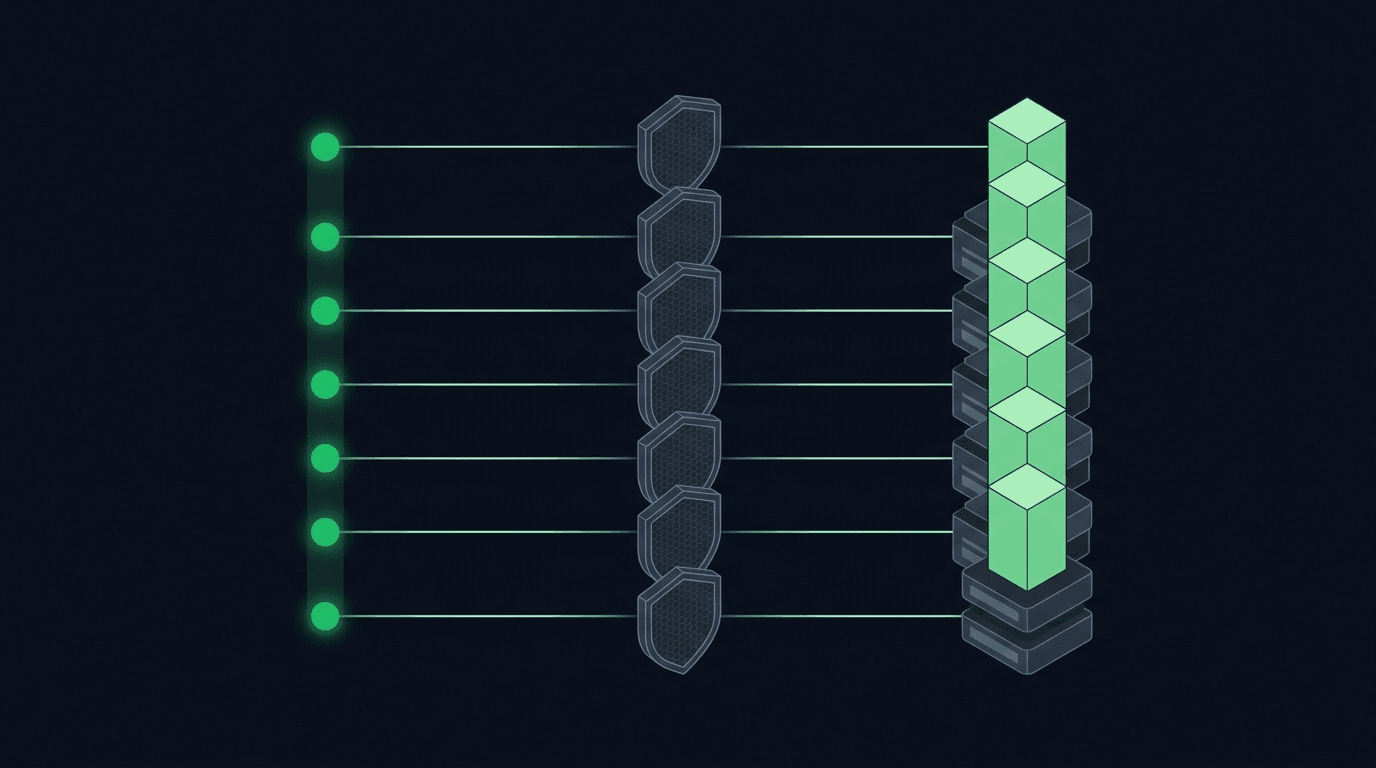
If you run a DCA strategy, TradingView webhook alerts can execute it for you so you are not logging in to place the same buy over and over. Dollar-cost averagi...
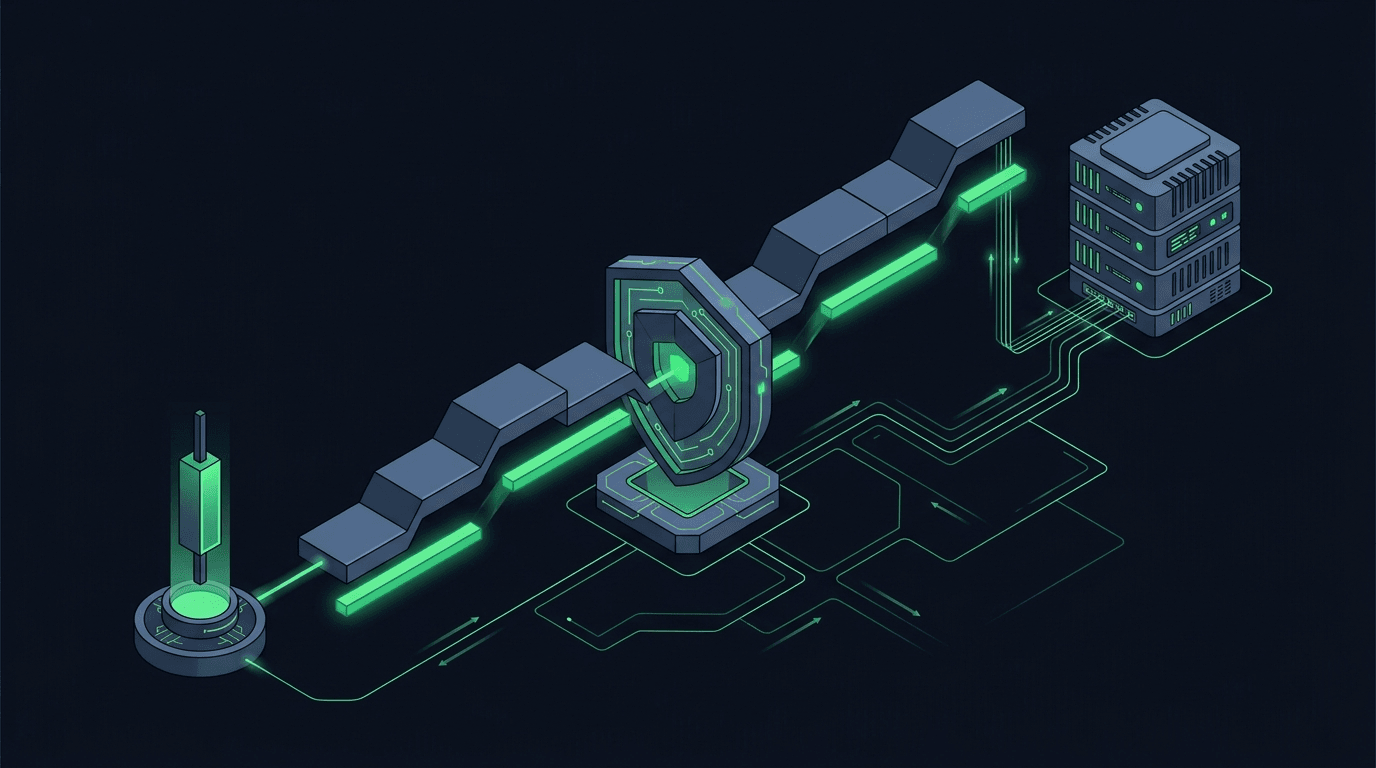
A trailing stop is one of the most requested features in TradingView webhook automation, and also one of the easiest to get wrong. The idea is simple: as price...
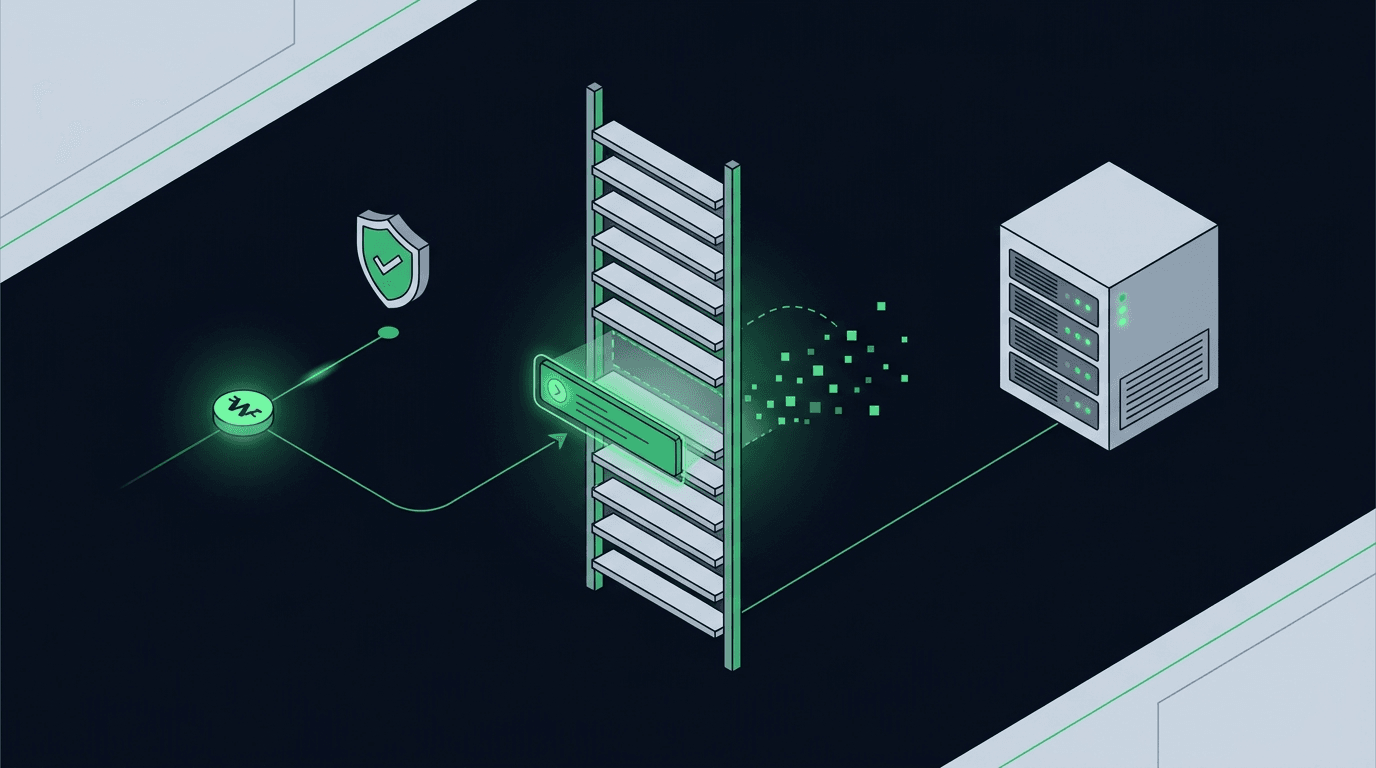
Most automation guides focus on how to open a trade. Far fewer explain how to cancel an open order using a TradingView webhook, and that gap causes real proble...
Non-custodial execution. Trade-only API keys. Independent infrastructure built for reliability.
Request Early AccessTrade-only API key enforcement. No withdrawal permissions. No custody.